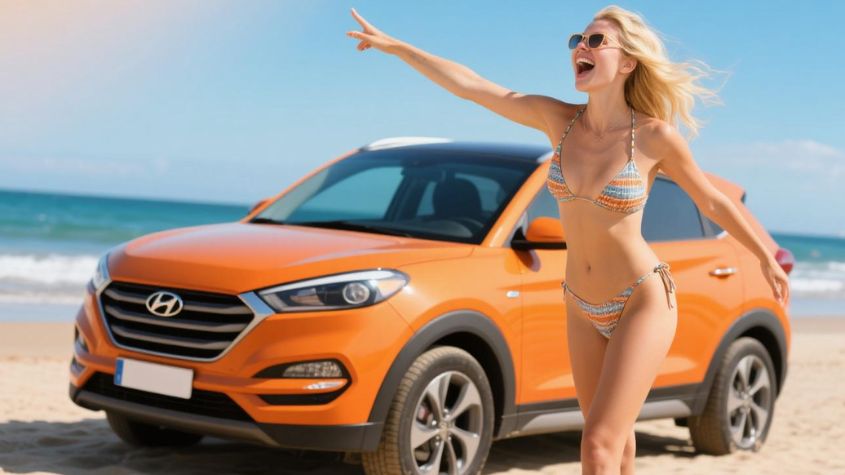
The Hyundai Tucson has had a bit of a wardrobe reshuffle and a small nudge up the pricing ladder, but don’t panic: this is less dramatic soap-opera cliffhanger and more minor plot twist before the interval. Even with the increase, the Tucson still undercuts the Volkswagen Tiguan by roughly £8,000, which in family-SUV money is the sort of gap that makes you check whether someone’s forgotten a digit.
Hyundai’s update is not about reinventing the wheel. There are no fresh engines, no secret performance pack, and no sci-fi mechanical wizardry hidden under the bonnet. Instead, the brand has concentrated on simplifying the range and reshuffling the trim structure, which is often exactly what buyers want. Choosing a family SUV is already complicated enough without needing a flowchart, a spreadsheet and an emotional support biscuit. The Tucson continues with petrol, hybrid and plug-in hybrid options, along with manual and automatic gearboxes and the choice of front-wheel drive or all-wheel drive depending on version.
A simpler Tucson lineup
The old Advance and Premium trims have stepped aside, replaced by Element and Black Line. Meanwhile, N Line has been rebadged as N Line Edition, while N Line S and Ultimate remain at the top of the tree. It is essentially the same cast, just with a slightly neater billing order.
That matters because the Tucson is one of those cars that has to do everything. School run on Monday, motorway slog on Wednesday, flat-pack wardrobe retrieval on Saturday, then a Sunday trip pretending the family is the kind that enjoys “spontaneous countryside adventures”. A cleaner trim lineup makes the buying decision feel less like decoding Marvel continuity and more like picking the version that actually suits your life.
Prices: up a little, but still competitive
The revised range now starts at £30,935 for the Tucson Element with a 148bhp 1.6-litre turbo petrol engine and a six-speed manual gearbox. If you want the 232bhp hybrid in the same trim, pricing begins at £34,860. Hyundai says these entry versions are both slightly more expensive than the models they replace.
Even so, the headline remains the same: the Tucson still looks like strong value in the family-SUV arena, especially when compared with pricier rivals such as the VW Tiguan. In a segment where manufacturers often behave as though every extra trim badge is worth the GDP of a small island nation, Hyundai’s positioning still feels refreshingly grounded.
What do you get for your money?
The Element trim may be the entry point, but it is far from bargain-basement stuff. Standard kit includes dual-zone climate control, wireless phone charging, Apple CarPlay and Android Auto through a 12.3-inch touchscreen, 17-inch alloy wheels, front and rear parking sensors, and a rear-view camera. In other words, this is not some steel-wheel special with the charisma of a microwave.
Move up to Black Line and the Tucson starts dressing like it knows it has somewhere trendy to be. You get 19-inch alloy wheels, black mirror caps, black window surrounds, rear privacy glass, LED rear lights, a 12.3-inch driver display, cloth and leather upholstery, plus heated front seats and a heated steering wheel. It is the sort of specification that makes winter mornings feel less like punishment and more like a tolerable inconvenience.
Then there is the N Line Edition, which turns the Tucson from sensible PE teacher into slightly over-enthusiastic gym instructor. It adds sportier bumpers, body-coloured wheelarches, unique upholstery, a premium audio system, three-zone climate control, heated rear seats, a powered tailgate, head-up display, matrix LED headlights and remote folding rear seats. That is a healthy pile of equipment for buyers who want their practical SUV with a side order of swagger.
At the top end, N Line S and Ultimate continue unchanged, bringing extras such as leather upholstery, a panoramic sunroof and electric seats.
Same engines, same broad appeal
Because there are no powertrain changes, the Tucson remains familiar under the skin. That is not necessarily a bad thing. Hyundai’s formula already made the Tucson one of the more compelling family SUVs on sale: roomy, well equipped, easy to live with and available with electrified options that make sense for real-world buyers rather than brochure fantasy. The plug-in hybrid versions of the new trims are set to become available to order in April 2026.
This update feels like Hyundai resisting the temptation to meddle for the sake of meddling. Some manufacturers treat a mid-life refresh like a Hollywood reboot nobody asked for. Hyundai, by contrast, has mostly changed the packaging, kept the useful bits intact and tried to sharpen the value proposition.
The bigger picture
The Tucson’s enduring appeal is that it plays the family-SUV game with uncommon confidence. It has enough style to avoid looking anonymous, enough technology to satisfy modern buyers, and enough practicality to cope with the chaos of real life. It does not shout for attention like a reality-show contestant, yet it also avoids fading into the background like airport lounge furniture.
Yes, prices are creeping up, as they seem to be on just about everything short of a Freddo in your nostalgic memories. But Hyundai has been careful not to push the Tucson into the danger zone where value-minded buyers start wandering off to rival showrooms. That £8,000 gap to the Tiguan remains a powerful argument, especially when household budgets are being stretched from every direction.
Verdict
The updated Hyundai Tucson is not a revolution. It is a tidy-up job. But it is a tidy-up job done with a clear sense of purpose.
Prices may have risen, but the Tucson still looks like one of the sharper deals in the family SUV class. The new trim structure is easier to understand, the equipment levels remain generous, and the range still offers enough variety to suit everyone from the no-nonsense commuter to the gadget-loving family driver.
Think of it like a blockbuster sequel that knows not to mess with the winning formula. A few new costumes, some tighter editing, the same dependable lead character – and crucially, a ticket price that still looks reasonable compared with the premium-branded rival down the road.

Rob is an experienced automotive journalist and editor, with a passion for all things automotive. Whether it’s automotive news and reviews, the latest in EV technology, or just an unusual take on the latest models, Rob is all over it!