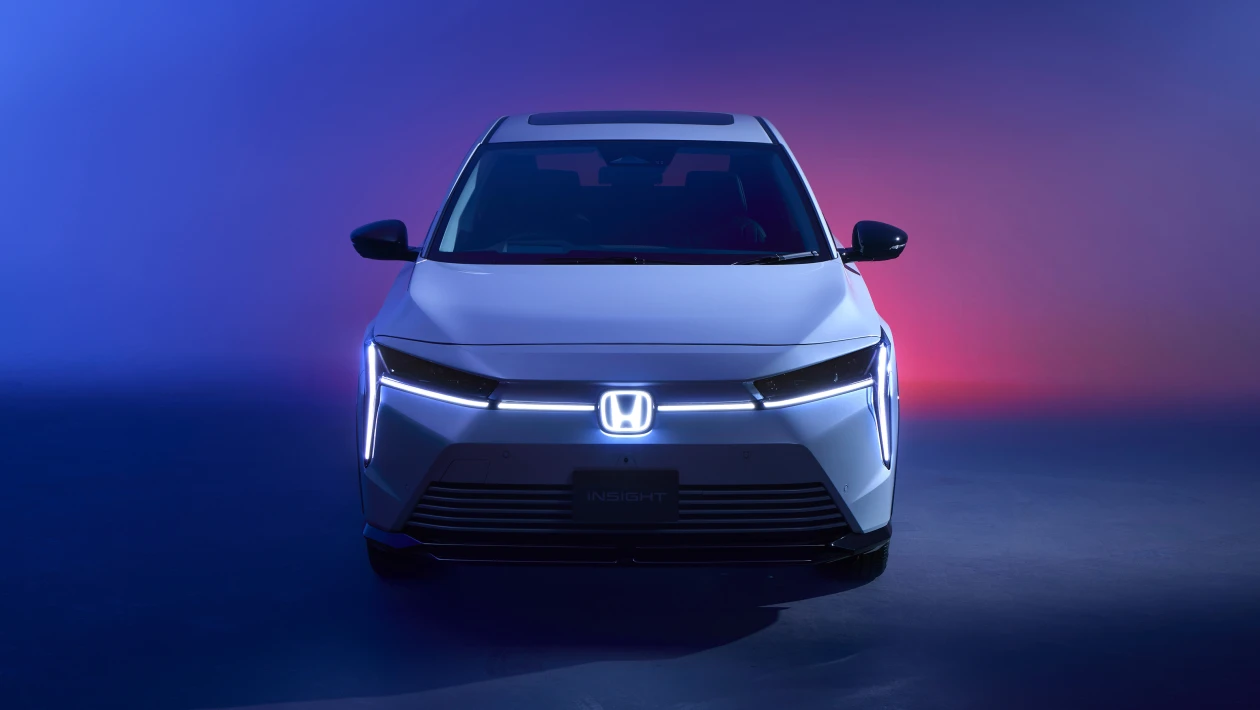
Honda is bringing the Insight name back from the archives, though this time the once-pioneering hybrid returns in a very different form. Instead of another petrol-electric efficiency champion, the latest Insight has quietly transformed into a fully electric model designed to hold the fort while Honda prepares its next generation of EVs.
In other words, this reborn Insight is less about revolution and more about buying time.
A Familiar Name with a New Mission
For anyone who remembers the original Insight from the late 1990s, the name carries real significance. That first model arrived at the dawn of hybrid motoring and went toe-to-toe with the Toyota Prius as one of the earliest attempts to blend electric assistance with petrol efficiency.
Fast-forward to 2026, and the nameplate has been repurposed again—this time for an EV that acts as a temporary bridge until Honda’s upcoming electric range arrives.
The catch? You probably won’t ever see one on British roads.
Honda plans to produce just 3,000 units, all destined for the Japanese domestic market. Europe and the UK aren’t part of the plan, making this Insight more of an intriguing footnote in Honda’s electrification journey than a global launch.
A Chinese Connection
Underneath the badge, the new Insight isn’t entirely a fresh creation. The car is effectively a Japanese-market adaptation of a model developed through Honda’s joint venture with Chinese manufacturer Dongfeng.
That partnership produced an EV called the eNS:2, and the Insight is essentially a rebadged version tailored for Japan.
This explains why the technology isn’t quite cutting-edge. Honda’s most advanced electric engineering is being reserved for the company’s future EV platform rather than this interim model.
Modest EV Credentials
In terms of numbers, the Insight’s performance is respectable rather than remarkable.
A single electric motor mounted at the front axle produces around 200bhp and 310Nm of torque, sending power exclusively to the front wheels. It’s enough to deliver brisk everyday performance, though it’s hardly going to trouble the more powerful EVs currently flooding the market.
Range is quoted at around 310 miles on China’s CLTC testing cycle. That figure tends to be optimistic compared with European WLTP standards, so a realistic expectation would likely land closer to 250 miles in real-world use.
In short, the hardware is perfectly adequate for daily driving but doesn’t push the boundaries of battery technology or efficiency.
Comfort Over Cutting-Edge
Where the Insight focuses its attention is inside the cabin. Like many modern EVs developed for the Chinese market, the emphasis is on interior space and a relaxed, lounge-style environment.
Expect a large central touchscreen, an open dashboard layout and a generally airy cabin design aimed at comfort rather than sporty engagement.
It’s a formula that has become increasingly common in electric vehicles, where packaging advantages allow designers to create more spacious interiors than traditional combustion-engined cars.
Why Honda Needs a Stopgap
The real story behind this car isn’t the Insight itself, but what comes next.
Honda is preparing an entirely new family of electric vehicles known as the 0 Series—a range that will form the backbone of the brand’s EV strategy in the coming years. Honda 0 Series
These cars are being developed from the ground up on a dedicated EV platform built around Honda’s “Thin, Light and Wise” philosophy, prioritising lightweight engineering, aerodynamic efficiency and advanced digital technology. The first models are expected to arrive globally from 2026 onwards, marking a significant shift in Honda’s electric ambitions.
Until then, the Insight effectively fills a gap in the lineup—particularly in markets where Honda wants to maintain an EV presence before its next wave of models lands.
A Placeholder, Not a Flagship
Perhaps the clearest clue that this isn’t Honda’s long-term EV vision lies in the badge itself. The traditional Honda emblem remains firmly on the nose, rather than the updated branding expected to debut on the upcoming electric range.
That’s a subtle signal that the Insight is merely a temporary measure rather than a technological showcase.
For enthusiasts hoping for Honda’s true electric breakthrough, patience is still required.
The Bigger Picture
Honda has historically been cautious in its approach to full electrification. While rivals accelerated into the EV market, the Japanese manufacturer leaned heavily on hybrids and efficiency improvements to bridge the gap.
The upcoming 0 Series suggests Honda is finally ready to go all-in on electric technology. When those cars arrive, they’ll represent a clean-sheet approach rather than an adaptation of existing models.
Until that moment comes, the new Insight quietly plays its role as a stopgap—an interesting revival of a once-iconic name that keeps Honda’s EV story ticking over while the real revolution waits in the wings.

Rob is an experienced automotive journalist and editor, with a passion for all things automotive. Whether it’s automotive news and reviews, the latest in EV technology, or just an unusual take on the latest models, Rob is all over it!