One of the most common questions asked by drivers considering the switch to electric motoring is: how long do EV batteries last?
It’s a reasonable concern. After all, the battery is the most expensive component in an electric vehicle, and many buyers worry that it will quickly degrade, resulting in reduced range and costly replacement bills.
Fortunately, real-world evidence suggests these fears are largely unfounded. Modern electric vehicle batteries are proving far more durable than many people initially expected, with many retaining the vast majority of their original capacity after years of use.
Understanding EV Battery Degradation
Unlike a traditional petrol or diesel engine, an EV battery doesn’t suddenly stop working when it reaches a certain age. Instead, lithium-ion batteries gradually lose capacity over time through a process known as degradation. This means the battery can still function perfectly well, but it may store slightly less energy than when it was new.
For example, a vehicle that originally offered 250 miles of range may provide 225 miles after several years of ownership if the battery has experienced around 10% degradation. This gradual reduction is completely normal and occurs in all rechargeable batteries, including those found in smartphones, laptops, and electric vehicles.
So, How Long Do EV Batteries Last?
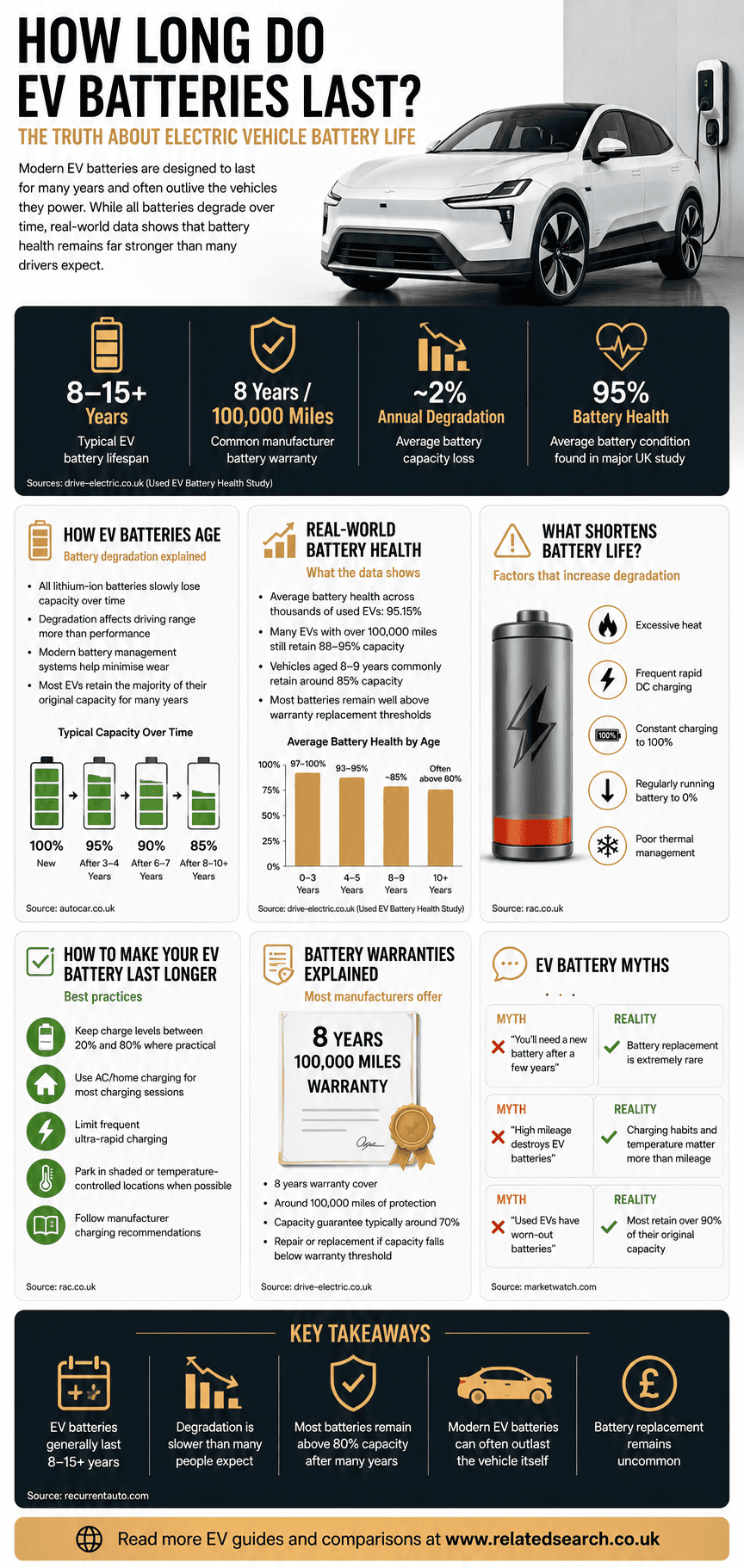
Most modern EV manufacturers design their batteries to last well beyond the typical ownership period. Many electric vehicle batteries are expected to remain operational for 15 to 20 years or more under normal driving conditions.
In terms of mileage, it’s not uncommon for manufacturers to design battery packs capable of exceeding 100,000 to 200,000 miles while maintaining a high percentage of their original capacity.
In reality, many EV batteries may outlast the vehicle itself.
What Do Manufacturer Warranties Tell Us?
One of the strongest indicators of battery longevity is the warranty offered by manufacturers.
Most electric vehicle brands provide battery warranties covering around:
- 8 years
- 100,000 miles
- 70% battery capacity retention
Some manufacturers offer even longer mileage coverage depending on the model. Manufacturers would not offer these warranties if widespread battery failures were common. In fact, battery replacement rates remain relatively low across the industry.
What Causes EV Battery Degradation?
Several factors influence how quickly an EV battery loses capacity.
Age
Even when not being used, batteries naturally age over time. This is known as calendar ageing and affects all lithium-ion batteries.
Frequent Rapid Charging
Rapid charging is incredibly convenient, particularly on long journeys. However, repeatedly using high-powered DC charging can generate additional heat, which may contribute to increased battery wear over many years.
For most drivers, occasional rapid charging is unlikely to cause significant issues.
Extreme Temperatures
Very hot and very cold conditions can place additional stress on battery cells. Many modern EVs use sophisticated battery thermal management systems to help protect the battery from temperature-related damage.
Regular High State of Charge
Consistently keeping a battery charged to 100% for extended periods can accelerate degradation in some battery chemistries. This is why many manufacturers recommend daily charging limits of around 80% for routine use.
How Much Battery Degradation Is Normal?
The good news is that modern EV batteries generally degrade slowly. Many studies and real-world owner reports suggest that most electric vehicles lose around 1-2% of battery capacity per year during the early years of ownership.
While individual experiences vary depending on usage patterns and environmental conditions, many EVs still retain well over 85% of their original battery capacity after eight to ten years. For many drivers, the reduction in day-to-day usability is barely noticeable.
Can You Check EV Battery Health?
Yes. As the used EV market grows, battery health has become an increasingly important consideration for buyers and sellers. Battery health can often be assessed through:
- Manufacturer diagnostic systems
- Battery health reports
- Specialist inspection services
- Compatible OBD2 diagnostic tools
These tools can provide valuable information about battery condition, state of health, charging performance, and overall system operation. For used EV buyers, checking battery health is often one of the most important parts of the inspection process.
Can EV Batteries Be Repaired?
Many people assume an ageing battery requires complete replacement. In reality, this is not always the case.
Modern battery packs consist of multiple modules and thousands of individual cells. In some situations, faulty modules or components can be repaired or replaced without changing the entire battery pack.
As electric vehicles become more common, battery repair and refurbishment services are becoming increasingly available.
Should Battery Lifespan Put You Off Buying an EV?
For most motorists, the answer is no. Battery technology has advanced rapidly over the past decade, and real-world data suggests that modern EV batteries are significantly more durable than many people expected. Most drivers are likely to replace their vehicle long before the battery reaches the end of its useful life.
While some degradation is inevitable, it tends to occur gradually rather than dramatically. For many owners, the difference in daily driving range after several years is relatively small.
Final Thoughts
So, how long do EV batteries last? In most cases, considerably longer than people think.
Modern electric vehicle batteries are engineered to deliver many years of reliable service, often lasting 15 years or more while retaining the majority of their original capacity. Combined with comprehensive manufacturer warranties and ongoing improvements in battery technology, concerns about battery lifespan are becoming increasingly outdated.
If you’re considering buying an electric vehicle, battery degradation is certainly worth understanding—but it’s unlikely to be the deal-breaker many once feared.

Rob is an experienced automotive journalist and editor, with a passion for all things automotive. Whether it’s automotive news and reviews, the latest in EV technology, or just an unusual take on the latest models, Rob is all over it!