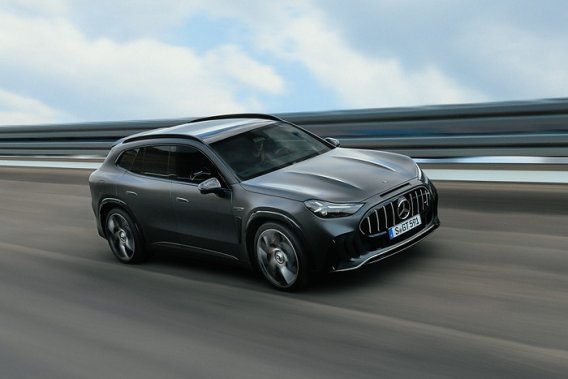
When a car weighs nearly 2.7 tonnes and produces up to 1,169hp, calling it restrained would be like describing a pub brawl as a lively discussion. The new Mercedes-AMG GT SUV is vast, electric and spectacularly excessive. Yet beneath the headline numbers and synthetic V8 soundtrack sits a serious idea: performance should last longer than one heroic launch.
This is AMG’s first full-size SUV developed entirely in-house and the second model on its AMG.EA electric architecture. There are three versions, beginning with the dual-motor GT 53 and rising through the triple-motor GT 55 to the 63. The flagship combines two axial-flux motors at the rear with a third at the front, producing 860kW at its peak. That converts to 1,169hp, or roughly enough to make every slip road feel woefully underqualified.
The smaller number matters more
The figure AMG should be proudest of is 530kW. That is the GT 63’s claimed continuous output — 721hp it can sustain rather than summon briefly for a brochure-friendly blast. Peak power lasts for up to 63 seconds, but the directly cooled battery and oil-cooled drive units are designed to keep delivering when repeated acceleration, hard laps or hot weather would make lesser systems start protecting themselves.
Electric performance cars have made straight-line violence almost ordinary. The hard part is doing it repeatedly without heat turning the fireworks into a polite sparkler. AMG cools each cylindrical battery cell directly with electrically non-conductive oil, while a central system sends cooling capacity where it is needed. That is far more interesting than winning another traffic-light numbers contest.
The official non-rollout claim for 0-100km/h is 2.7 seconds. Impressive, naturally, but the engineering behind the fifth hard acceleration matters more than the first. A proper AMG cannot become shy just because its battery has worked up a sweat.
A charging claim from the near future
Buyers can choose 106kWh or 128kWh usable batteries in the upper models. With the larger pack, Mercedes claims up to 700km — about 435 miles — of WLTP range and a remarkable 710kW DC peak. Under ideal conditions, 10 to 80 per cent is said to take as little as 12 minutes, with as much as 450km of range added in ten.
Those preliminary figures read like they have arrived from the next charging era. The car also accepts 400-volt charging, which is rather more relevant when the available plug has not been shipped back from 2032. What matters is the intent: this enormous SUV is designed to recover energy as aggressively as it spends it.
AMG is fighting physics it helped create
There is no escaping the mass. Depending on battery, the GT 63 weighs up to 2,695kg before passengers start debating lunch. AMG attacks the problem with hydraulically linked suspension that actively resists pitch and roll, rear-wheel steering of up to six degrees and variable all-wheel drive. Three centre-console dials let the driver alter response, cornering behaviour and wheel slip, because apparently choosing a radio station no longer counts as sufficient pre-departure admin.
This is clever technology, although it also exposes the glorious absurdity of the project. The car needs pumps, valves, rear steering and active aerodynamics partly to disguise the consequences of being a five-metre electric SUV with a huge battery. Engineering has not defeated physics; it has hired more engineers to negotiate with it.
At least practicality survives the argument. The official figures show a 607-litre boot, a 78-litre front compartment and up to 1,740 litres with the rear seats folded. This is still a family-sized machine, even if its acceleration could rearrange the weekly shop.
The theatre risks trying too hard
AMG has recorded real V8 and six-cylinder engines using 16 microphones, then recreated their sounds through the electric SUV. Simulated shifts, steering-wheel paddles and seat shakers complete the production. Some owners will adore it. Others may wonder why 2,000Nm needs the assistance of automotive karaoke.
The saving grace is choice. Sound profiles can be adjusted, and Silent mode exists for anybody who prefers three axial-flux motors to speak through acceleration rather than impersonation. AMG should trust that hardware. The cooling, sustained power, active chassis and charging ambition already give this SUV a personality.
The GT SUV is excessive because excess is AMG’s native language. But its most convincing achievement is not the giant peak output or the digitised V8 rumble. It is the promise that the performance can be repeated. If the production car delivers that consistency, the fake cylinders can remain a party trick; the electric engineering will be the real noise.
Sources
- New Mercedes-AMG GT SUV: the Porsche Cayenne’s worst nightmare is here
- High-tech SUV with sports car DNA: The new Mercedes-AMG GT SUV
Image credit: Mercedes-Benz AG

We are experienced automotive journalists and editors, with a passion for all things automotive. Whether it’s automotive news and reviews, the latest in EV technology, or just an unusual take on the latest models, we’re all over it!