Ten years ago, if someone had told you that the default family car of the future would be an electric crossover built by a company run by a billionaire who posts memes at 2am and occasionally behaves like he’s auditioning for the next Bond villain, you’d probably have laughed them out of the pub.
Yet here we are.
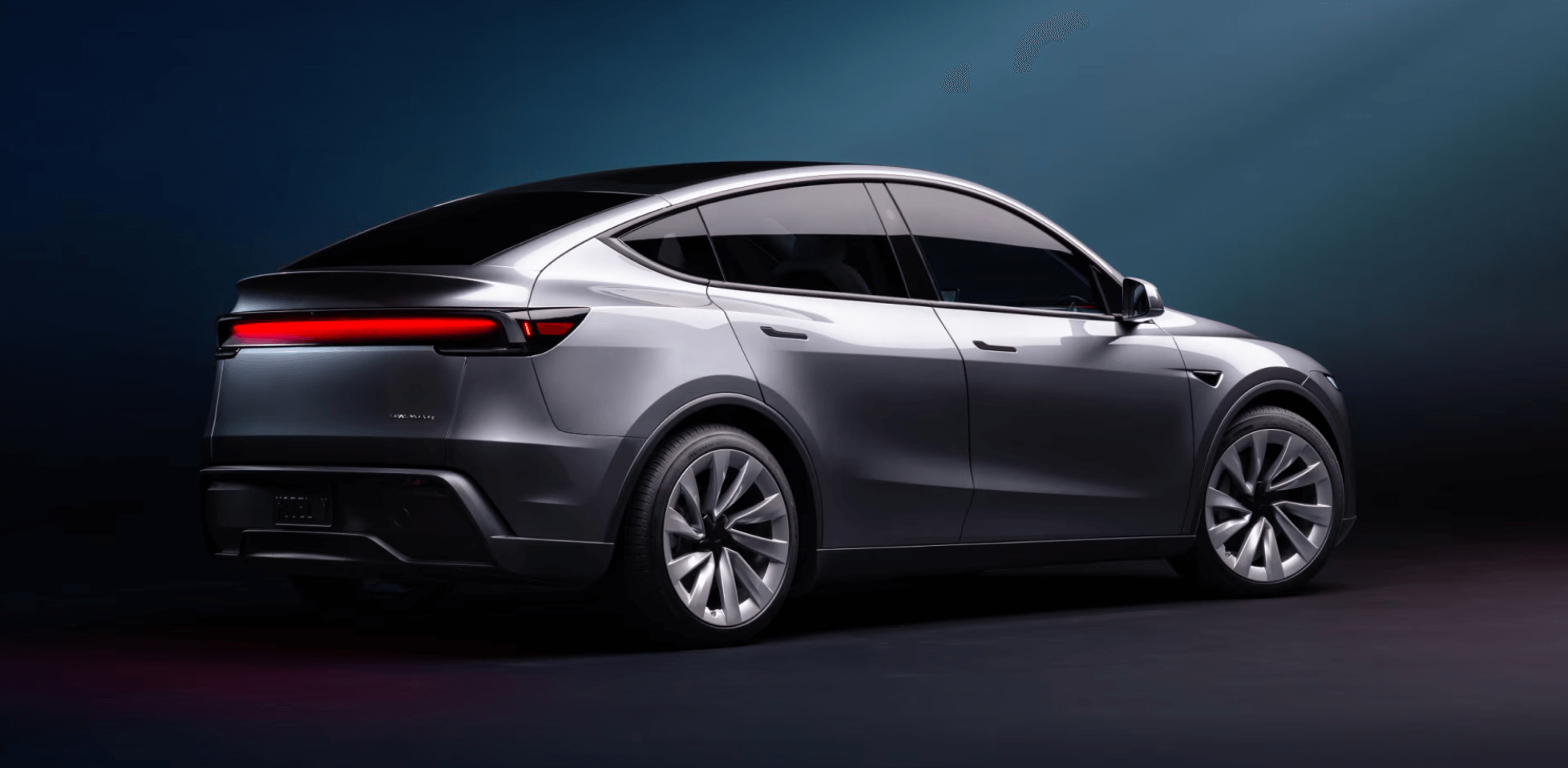
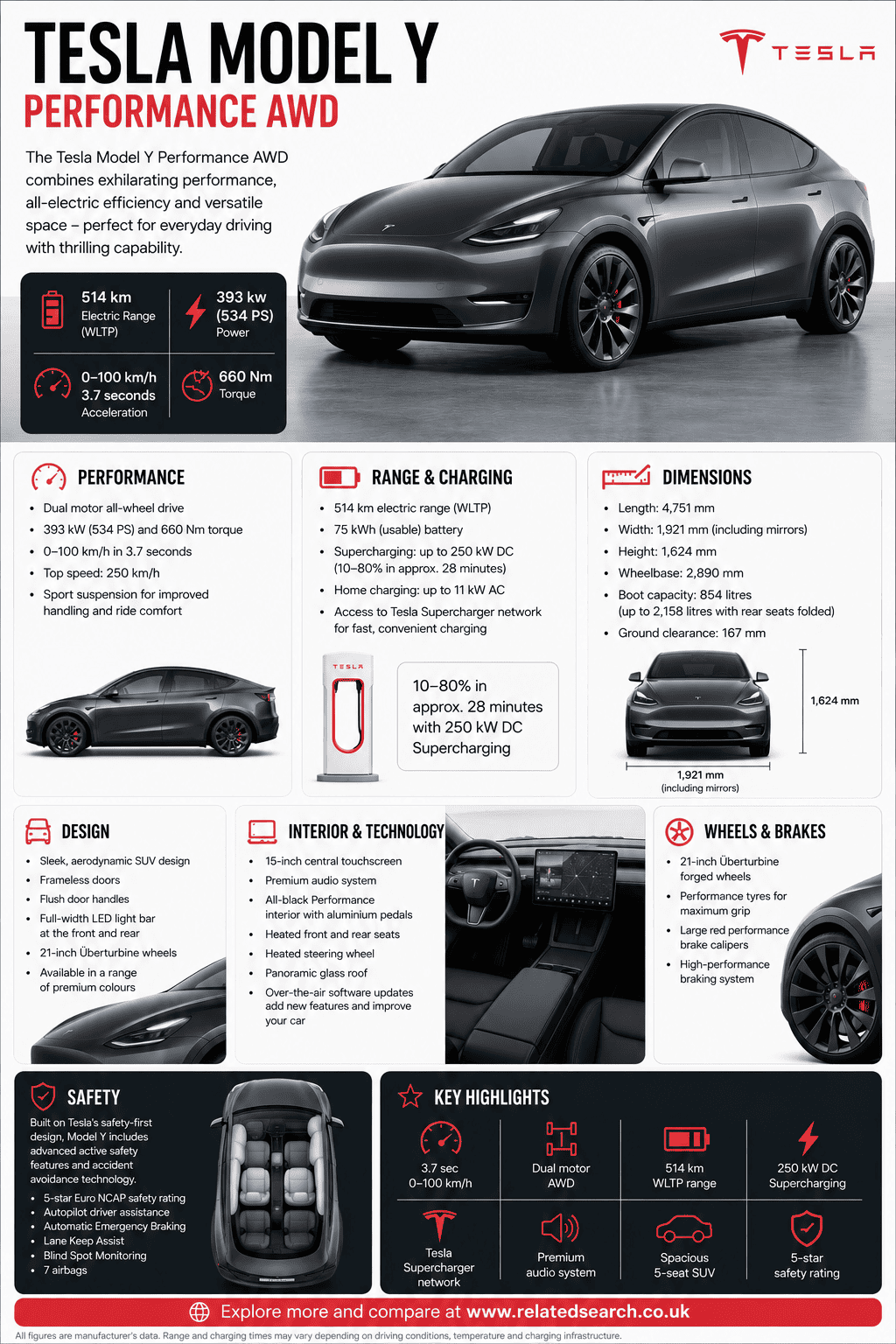
The Tesla Model Y isn’t merely successful. It has become something altogether stranger: the car equivalent of an iPhone. It’s everywhere. School runs? Model Y. Supermarket car park? Model Y. Services on the M25? Approximately 37 Model Ys, all queued at the chargers while their owners pretend they’re perfectly relaxed.
The question is no longer whether the Model Y is popular. It clearly is. The real question is whether it deserves to be.
Has Tesla genuinely created the ultimate family car benchmark? Or has the automotive world simply become caught up in the biggest case of mass hysteria since everyone collectively decided that pineapple belongs on pizza?
The case for the prosecution
Let’s start with the uncomfortable truth for Tesla’s critics. The Model Y does almost everything a modern family actually needs, and it does it infuriatingly well.
Space? There’s loads of it. The rear seats easily accommodate child seats, gangly teenagers, or adults unfortunate enough to have drawn the short straw on a family holiday. The boot is enormous, offering enough room for buggies, luggage, sports equipment, a week’s shopping, and probably a minor cast member from Stranger Things.
Then there’s the front boot, or “frunk”, which remains one of those features that initially feels like a gimmick but quickly becomes indispensable. It’s ideal for storing muddy football boots, charging cables, or anything else you don’t particularly want rattling around alongside the family picnic.
Performance is another area where the Model Y rewrites expectations. Even the standard versions accelerate with enough force to make your children squeal with delight and your elderly relatives question whether they accidentally boarded a SpaceX rocket.
A family SUV capable of embarrassing sports cars at traffic lights remains deeply amusing. More importantly, it makes everyday driving effortless. Overtaking dawdling caravans on the A303 no longer requires military planning and divine intervention.
The technology elephant in the room
The Model Y’s biggest strength is also its most controversial feature: the technology. Step inside most conventional family SUVs and you’ll find a dashboard resembling the cockpit of a budget airline. Buttons everywhere. Menus hidden within menus. Climate controls requiring the dexterity of a concert pianist.
The Tesla, by comparison, resembles a Scandinavian furniture showroom designed by Apple. Some people love this minimalist approach. Others hate it with the fiery intensity usually reserved for reality television contestants.
Want to adjust the mirrors? Screen. Open the glovebox? Screen. Change the airflow direction? You guessed it. There are moments when using a Tesla feels less like driving a car and more like trying to update your broadband router.
Critics argue that removing physical controls is dangerous, distracting and deeply annoying. They’re not entirely wrong. Attempting to alter the wipers while navigating torrential rain on the M20 can occasionally feel like participating in an episode of Taskmaster.
Nevertheless, many owners adapt quickly. Once accustomed to the interface, it becomes second nature. Much like smartphones, people initially complained, then quietly accepted their fate.
Charging: still the ace card
The greatest advantage Tesla retains isn’t the car itself. It’s the charging network. No more ‘how long do EV batteries last?’ Anyone who has attempted a long-distance journey in an EV using multiple public charging providers knows the experience can resemble a dystopian game show.
“Congratulations! You’ve arrived at your charger. Unfortunately, this app requires another app, which requires a membership card, which requires blood samples and a signed affidavit.”
Tesla’s Supercharger network remains vastly superior. You arrive. You plug in. It works. That shouldn’t feel revolutionary in 2026, but somehow it still does. For busy families juggling school runs, swimming lessons, football training, dance classes and approximately six hundred WhatsApp groups, simplicity matters enormously.
Parents don’t want adventures. They want predictability. The Model Y provides it.
But let’s not pretend it’s perfect
Here’s where things become controversial. The Tesla Model Y is also, whisper it quietly, a little bit boring.
There. I said it.
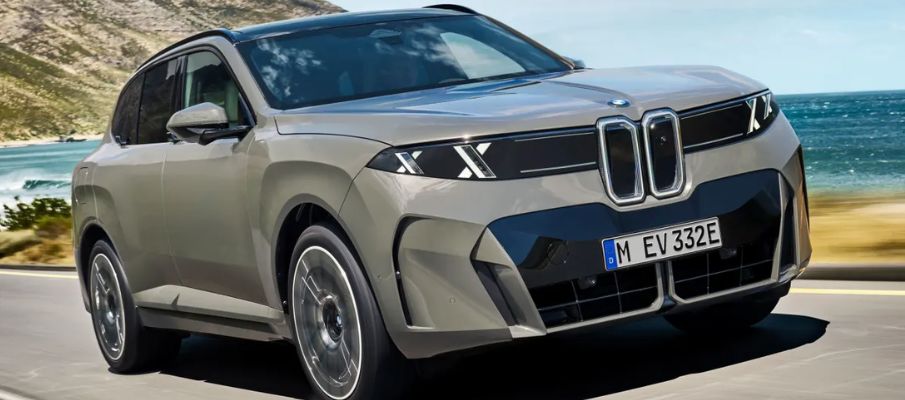
The automotive equivalent of beige paint and sensible mortgage advice. It’s ruthlessly competent but not especially charming. It lacks the warmth, personality and occasional irrationality that make certain cars memorable. A Kia EV9 feels more special. A Hyundai Ioniq 5 has more visual drama. A BMW iX3 feels more premium. Even the humble Skoda Enyaq possesses a sort of understated charisma.
The Model Y is simply… efficient. It’s Coldplay. Massively successful, undeniably accomplished, but not something everyone admits to loving.
Then there’s ride quality.
Although improvements have been made, particularly on newer models, British roads remain the Tesla’s natural predator. Potholes, expansion joints and crater-sized imperfections can occasionally make progress feel like crossing the surface of the moon in a shopping trolley.
Build quality criticisms haven’t entirely disappeared either. While Tesla has improved significantly, some traditional manufacturers still offer a greater sense of solidity. You probably won’t notice. But if you’re spending premium money, you might expect perfection.
The competition is catching up
Perhaps the biggest challenge facing the Model Y is that the rest of the industry finally woke up. For years, Tesla enjoyed the automotive equivalent of arriving at a fancy dress party several hours before everyone else. Now the competition has arrived.
The Hyundai Ioniq 5 offers retro cool and rapid charging. The Kia EV9 practically doubles as a mobile bungalow. The Volvo EX40 combines Scandinavian luxury with reassuring safety credentials. The Renault Scenic E-Tech is genuinely excellent. Even Chinese brands such as BYD are rapidly closing the gap while often undercutting Tesla on price.
Suddenly, choosing a family EV isn’t a one-horse race. It’s Glastonbury. There are headliners everywhere.
So, is it the benchmark?
Yes. Annoyingly, stubbornly, frustratingly… yes. The Tesla Model Y remains the benchmark against which every family EV is measured.
Not because it’s flawless. Not because it’s the most luxurious. Not because it’s the most exciting. It holds that position because it understands modern family life better than almost anything else on sale. Families need space, practicality, low running costs, safety, performance, easy charging and technology that largely works.
The Model Y delivers all of that in one package.
However, benchmark doesn’t mean best for everyone. Some families will prioritise comfort. Others will value character, seven seats, premium interiors or simply prefer buying from an established dealer network. And that’s perfectly reasonable.
The truth is that the automotive world no longer revolves around one dominant model. But if every family EV still ends up being compared with the Tesla Model Y, perhaps that tells us everything we need to know.
Love it or loathe it, the Model Y has become the Ford Mondeo, Volkswagen Golf and people carrier of the electric age.
The benchmark has changed. And for now, Tesla still owns it.

Rob is an experienced automotive journalist and editor, with a passion for all things automotive. Whether it’s automotive news and reviews, the latest in EV technology, or just an unusual take on the latest models, Rob is all over it!