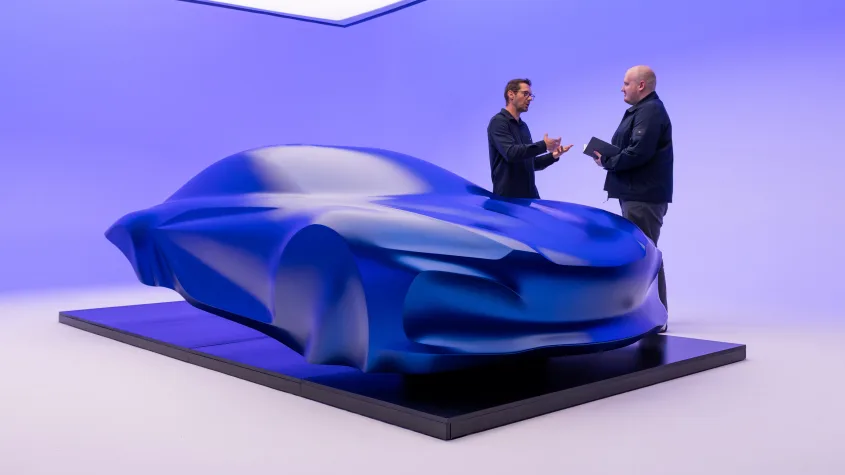
DS has always promised French luxury, yet too often delivered a familiar car wearing an unusually expensive handbag. The F3VER Concept finally gives the brand a sharper answer. It is compact, electric and sufficiently peculiar to make you look twice — precisely what a young premium badge needs when nobody is obliged to remember it exists.
The name is F3VER, with a number in place of a letter, because even Parisian elegance occasionally succumbs to a gaming username. Ignore that. The car itself has a sculpted stance, a plunging roof and enough lighting theatre to illuminate a minor arrondissement. It does not resemble a shrunken German saloon or another apologetic crossover. That alone counts as progress.
DS describes the concept as a design laboratory that will inform future models. It has not announced a production version, price or showroom date, despite the temptation to see a new small DS hiding beneath the show-car jewellery. For now, F3VER is a statement of intent. The encouraging part is that the statement contains a practical boot.
Small outside, properly useful within
At 4.19 metres long, 1.85 metres wide and 1.46 metres tall, the F3VER occupies sensible road space. A 2.70-metre wheelbase and 400-litre luggage compartment suggest DS has not sacrificed daily usefulness on the altar of dramatic proportions. This is a concept that might cope with shopping, luggage and the mess of normal life without needing a support vehicle.
DS also promises class-leading electric range, but supplies no number, battery capacity, motor output or charging speed. ‘Class-leading’ without a class or a figure is perfume-advert language: atmospheric, expensive and impossible to measure. The eventual road car will need hard evidence before anyone should applaud its long-distance ability.
Still, withholding fantasy specifications is preferable to claiming a thousand miles from a battery chemistry that exists only in a presentation. F3VER’s point is shape, space and identity. DS should keep its attention there, then fit the production hardware when it is ready to make promises.
The lights are doing most of the talking
A vertical illuminated ‘totem’ carries the DS emblem at the nose, flanked by Y-shaped lamps. Another sits at the rear, where a digital badge and 16 LED panels create a tunnel effect. Their magnesium support takes inspiration from the vaulted roof of Paris’s Grand Palais, which is gloriously extravagant reasoning for something whose basic job is telling the car behind that you have stopped.
The rear lights can display animated patterns and information, while a customisable ring runs around the panoramic roof. Two-tone paint wraps beyond the usual roof panel and across the rear bodywork. The Cosmic Blue finish shifts towards deep violet as the light changes. You may find all this delicious or exhausting. At least it is recognisably DS.
Personalisation can become a trap when it turns a coherent design into an options catalogue. The F3VER works because the flamboyance sits on a clean base. Strong shoulders and smooth flanks carry the decoration; they are not buried beneath fake vents, plastic wheel-arch eyebrows and random creases. Buyers should be allowed to play, but the car needs to remain handsome after the configurator has closed.
Less clutter could be DS’s cleverest luxury
The brand calls its method ‘Design Intelligence’: fewer components, lighter structures, cleaner aerodynamics and less visible assembly. The front lamp and daytime running light form one unit, each bumper uses a single piece and the lower body loses the usual added plastic trim. Digital tools and artificial intelligence helped the designers explore ideas more quickly, although DS insists the software did not replace human creativity.
That last reassurance is revealing. Nobody wants a luxury car designed by the same machine that suggests the next word in an email. Yet using computation to remove parts and simplify construction is sensible. Real sophistication often comes from editing. A quiet surface fitted accurately can look richer than fifty decorative pieces all shouting for attention.
F3VER’s best idea is therefore the least showy one: create character with less stuff. Premium small cars have become heavy with screens, trim packs and contrived ruggedness because manufacturers fear simplicity will look cheap. DS is arguing that purity can look expensive. It is right, provided the production accountants do not translate ‘fewer components’ into ‘less car for more money’.
The F3VER is still a motor-show promise with unanswered technical questions. But for once DS is not asking heritage or upholstery to do all the work. It has produced a compact shape with presence, useful proportions and a face you could identify at night. Keep the clean body, publish honest range figures and calm down the name. French luxury is most convincing when it is confidently odd.
Sources

We are experienced automotive journalists and editors, with a passion for all things automotive. Whether it’s automotive news and reviews, the latest in EV technology, or just an unusual take on the latest models, we’re all over it!