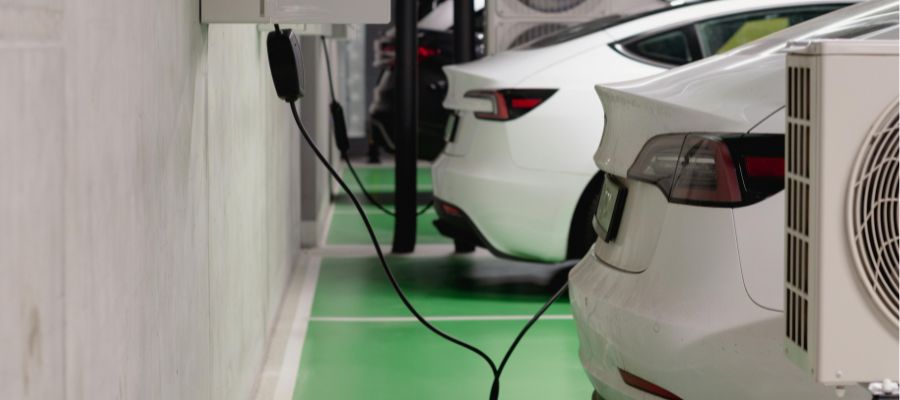
Nothing makes an electric car sound more irresistible than the promise of filling one for the price of a mediocre motorway coffee. E.ON Next’s latest headline rate is 6.5p per kWh, cheap enough to make the old petrol-station price board look like a threat. But the interesting story is not whether a particular Tesla can be brimmed for roughly four quid. It is how much domestic admin you are prepared to perform in pursuit of those wonderfully cheap electrons.
Because an EV tariff is not a magic plug. It is a bargain struck between your car, your house, your habits and an app that would quite like to organise all three.
The cheap bit really is very cheap
On Next Drive Smart, E.ON charges 6.5p per kWh between midnight and 6am. That is dramatically below Ofgem’s average electricity price-cap rate of 26.32p per kWh for a direct-debit customer from October to December 2026. E.ON fixes its tariff for a year and charges no exit fee.
Better still, the low rate applies to the whole home during the overnight window, rather than being fenced off for the car. A home battery can fill its boots, the dishwasher can clatter away and the tumble dryer can enjoy a six-hour festival of fiscal irresponsibility. E.ON can also add cheaper daytime charging windows when its system spots favourable grid conditions, with the lower price again covering household use while the smart charge is active.
That is the genuinely clever part. The car becomes a reason to shift demand away from the expensive evening crush, while the rest of the house sneaks along for the ride. EV ownership starts looking less like a transport decision and more like household energy strategy — which is useful, even if it sounds dangerously close to homework.
Your bargain needs the right hardware
The catch is compatibility. Next Drive Smart requires a smart meter sending half-hourly readings, the E.ON Next Home app and a compatible car or home charger. You plug in, tell the app your target charge and departure time, and let E.ON decide when the power flows. An urgent top-up is possible through the Boost function, but charging outside the smart schedule at the peak rate costs 34.042p per kWh.
That number deserves a bright circle around it. The cheap rate is a quarter of Ofgem’s current average cap figure; the peak rate is higher. A household that reliably charges overnight could do very well. One that regularly arrives home nearly empty and needs to leave again before bedtime may discover that the bargain has teeth.
Nor should anyone treat the “fill-up for £4” idea as a universal promise. EV batteries vary, owners rarely charge from precisely empty to precisely full, and charging losses exist. It is an attention-grabbing illustration, not a price stamped on every journey. The only figure that matters when comparing tariffs is what your own car consumes and when your own household uses electricity.
Cheap miles are becoming a lifestyle product
E.ON estimates savings of up to £476 a year against its chosen standard-variable comparison. That calculation assumes 8,000 miles annually, efficiency of 3.33 miles per kWh and charging at the off-peak rate. Fair enough as a worked example, but it is still an example. Your mileage, efficiency, region and appetite for midnight laundry will rewrite the answer.
This is the slightly comic destination of the electric-car revolution. We were promised silent performance and freedom from petrol stations; we have received push notifications about the washing machine. Yet there is real progress hiding beneath the faff. Home charging already turns the driveway into a private fuel stop. Smart tariffs can make that fuel remarkably cheap and help use electricity when demand is lower.
The question is whether the software behaves itself. Drivers should be able to set a departure time, plug in and forget about it. If the app loses its connection, the charger sulks or a manufacturer changes its digital plumbing, a cheap rate quickly feels expensive in patience. Energy suppliers are no longer selling only electricity; they are selling dependable orchestration.
Read the tariff, not the coffee comparison
E.ON’s 6.5p rate is properly tempting, especially for a household with predictable routines, compatible equipment and other energy-hungry devices that can work overnight. It deserves attention because it makes the running-cost advantage of an EV feel tangible at a moment when household bills remain painful.
Just do the unglamorous bit first. Check compatibility, compare the peak rate, study your actual charging times and include the rest of the home in the calculation. The clever buyer will not ask whether a Model Y can be filled for the price of a coffee. They will ask whether the tariff still looks cheap on the chaotic Tuesday when everything needs power at once.
Sources
- E.ON delivers UK's cheapest EV charging: fill a Tesla Model Y for £4
- Compare electric vehicle tariffs: Next Drive Fixed vs Next Drive Smart
- E.ON Next energy tariffs
- Energy price cap unit rates and standing charges

We are experienced automotive journalists and editors, with a passion for all things automotive. Whether it’s automotive news and reviews, the latest in EV technology, or just an unusual take on the latest models, we’re all over it!