Porsche has unveiled the rarest thing in the motor industry: a corporate strategy containing a sentence that might make enthusiasts stop scrolling. It is developing a mid-engined supercar platform for a new model line above the 911. Above the 911. That is a fabulously dangerous place to aim, rather like announcing a new guitarist who will stand in front of Jimmy Page.
There is no confirmed engine, price or showroom date yet, so the delicious mechanical details remain under lock and key. Porsche says it will preview the potential platform on 15 October. Still, a bespoke mid-engined foundation matters. This sounds like more than another 911 derivative wearing an heroic price tag and a wing visible from Belgium; it gives Porsche room to create a proper halo car with its own proportions and purpose.
The spreadsheets have discovered emotion
The supercar sits inside Porsche’s new strategy, called Sportwagenschmiede ’35. Roughly translated, the message is that Zuffenhausen wants to behave more like a sports-car workshop and less like a bewildering configurator with a factory attached. The official slogan is “Value over Volume”, which is corporate language for selling fewer things more profitably.
Some tidying is overdue. Porsche intends to cut the number of model variants by about 20 per cent and hopes each surviving variant will sell around 30 per cent more strongly. Anyone who has lost an afternoon trying to remember whether a particular badge denotes speed, equipment or expensive stitching may applaud. Fewer, more distinct Porsches could make the range clearer and the cars more special.
But there is a sharper edge. Porsche wants roughly 45 per cent of its portfolio in the larger, more profitable D and E segments, while the average selling price of its top models is meant to rise by about 20 per cent. More individualisation and more ultra-exclusive projects are coming too. There is nothing inherently wrong with wealthy customers funding interesting engineering. The danger is that “value” becomes a polite synonym for asking more money while giving ordinary buyers fewer ways into the brand.
Yes, there are more SUVs
The balancing act becomes obvious lower down the plan. Porsche will present a new B-segment SUV in 2028, offered with combustion and plug-in hybrid power alongside the electric Macan. It is also exploring a larger D-segment SUV positioned above the Cayenne. The latter is a possibility rather than a confirmed production car, but you can already hear the parking spaces trembling.
Purists will grumble, as purists are contractually obliged to do, yet the Cayenne and Macan have spent years turning practical family transport into money for sports cars. Another SUV is not automatically a betrayal. It becomes one if Porsche uses its most profitable models merely to finance even more profitable models. That is why the supercar is crucial: it must be the visible proof that the cash machines still serve the engineering culture, rather than the other way round.
Powertrain dogma is staying outside
Encouragingly, Porsche is keeping combustion engines, plug-in hybrids and battery-electric cars in play. The electric 718 Boxster and Cayman are expected to contribute through their first full production year in 2028, while investment continues in combustion and PHEV technology as well as next-generation batteries. This is the sensible enthusiast position. A great Porsche should earn affection through its shape, responses and engineering character; the presence or absence of a tailpipe is not a personality test.
The less glamorous side of the plan deserves daylight. Porsche says an agreement with employee representatives includes a socially responsible reduction of 9,000 jobs, alongside security for the core workforce until 2035. It also wants a break-even point below 200,000 cars and lower development costs. Those may be necessary commercial measures, but they are a reminder that the exciting product promises arrive with a substantial human and engineering squeeze behind them.
A halo car cannot be accounting with headlights
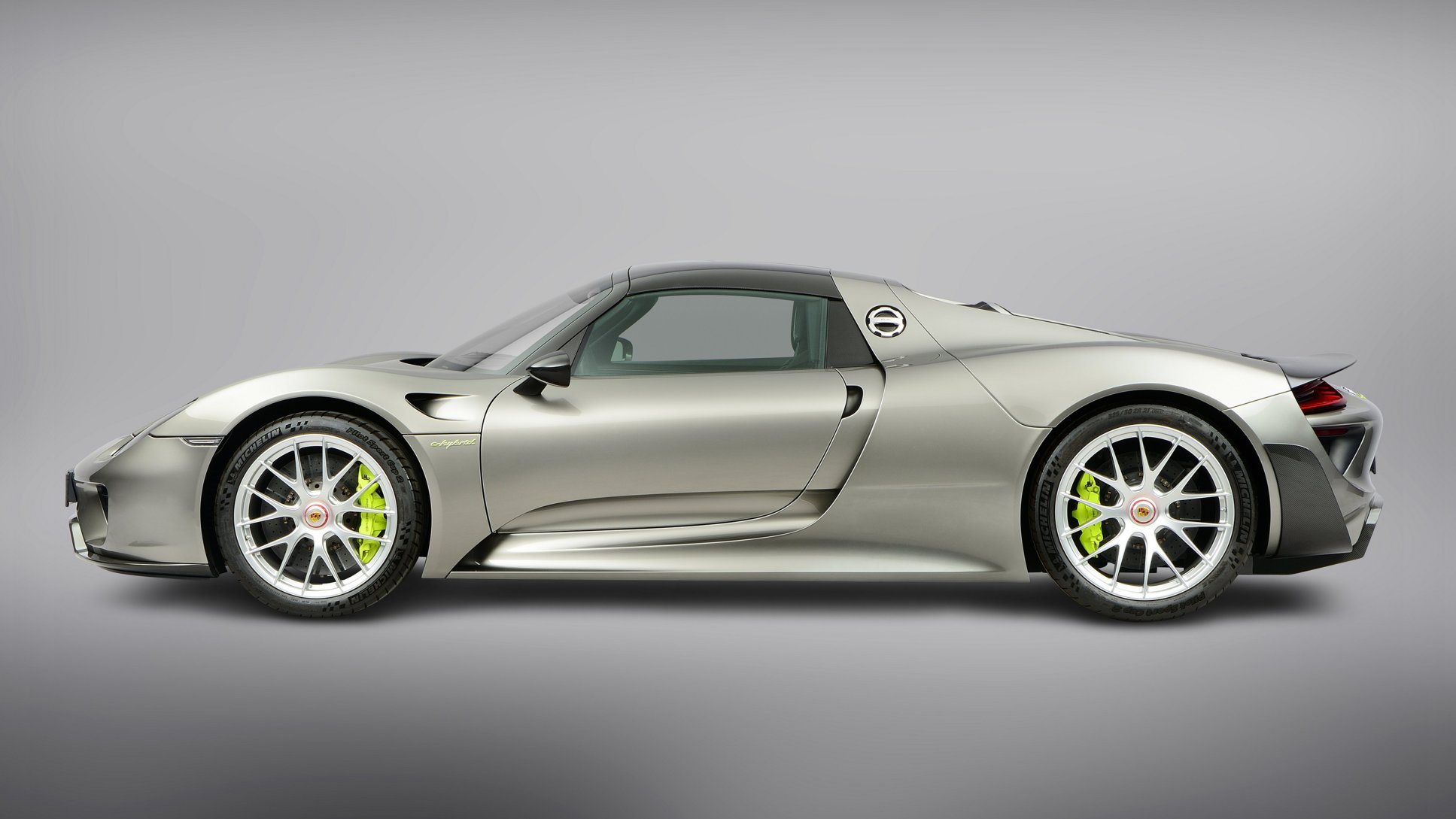
Porsche’s history is full of cars that changed the temperature of the whole company: the 959, Carrera GT and 918 Spyder did more than sit above the 911. They explored ideas, created posters and made the everyday models feel connected to something wonderfully excessive. The next one has to do the same.
If Porsche builds a genuinely distinct mid-engined machine, lets its technology trickle down and gives it the visual drama to stop a ten-year-old in the street, the SUV expansion will be easier to forgive. If it becomes a limited-number invoice designed mainly to lift the average selling price, “Value over Volume” will sound painfully literal. The platform is the promise; now Porsche must build the reason we care.
Sources
- Auto Express: New Porsche supercar to balance future SUV plans
- Porsche presents new strategy through to 2035
- Porsche Newsroom: The super sportscar
Image credit: Porsche AG

We are experienced automotive journalists and editors, with a passion for all things automotive. Whether it’s automotive news and reviews, the latest in EV technology, or just an unusual take on the latest models, we’re all over it!