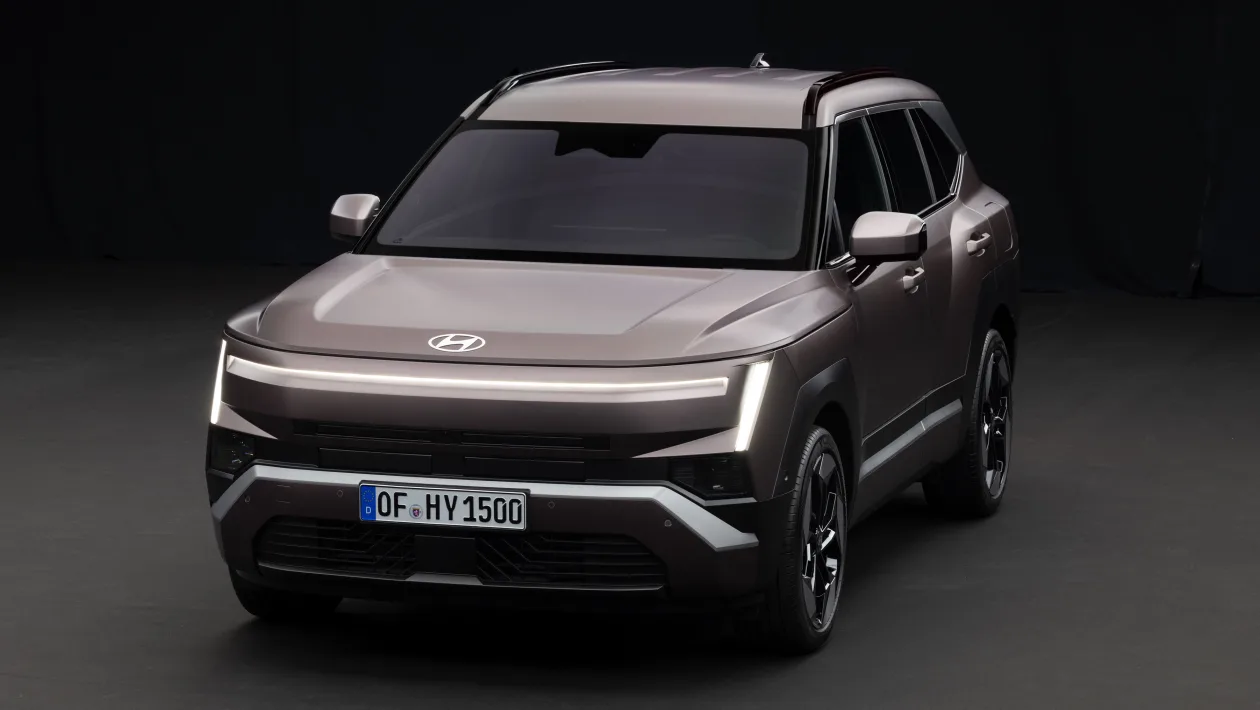
The new Hyundai Tucson has a 17-inch touchscreen, AI voice control and headlights containing 25,600 LED pixels. Fine. The feature that deserves applause is a rear door that opens to 83 degrees. That extra ten degrees could save more family arguments than every pixel, app and artificial-intelligence party trick combined.
This is the fifth-generation Tucson for Europe, and Hyundai appears to have remembered what family SUVs actually do. They carry child seats, laptops, damp coats, half a cereal bar and somebody who has suddenly decided they hate shoes. The glamour lies in removing tiny daily irritations. Open the back door almost square to the body, swing in the child seat without performing amateur yoga, and the benefit is obvious before the engine has started.
Big screens meet real buttons
Hyundai has not resisted the industry’s screen-size contest. Depending on specification, the central display measures 12.9 or 17 inches and runs Pleos Connect, an Android Automotive-based system with online services, downloadable apps and an AI-enhanced voice assistant. Seventeen inches is a lot of luminous dashboard. It is less infotainment screen, more kitchen television looking for a wall.
Yet somebody sensible survived the design meeting. Frequently used functions retain physical buttons beneath the display, while a slim 9.9-inch instrument panel sits in the driver’s sightline. That combination matters. A huge screen is tolerable when changing the temperature does not require three taps, a swipe and a short course in software engineering.
The practical details keep coming. There are four 100W USB-C ports capable of feeding laptops and tablets, two wireless charging pads, umbrella holders in both front doors and cup holders moulded into the rear door trims. Second-row passengers also get an AddGear mounting point for accessories such as phone or tablet holders. None will dominate a billboard, but together they suggest Hyundai has watched families use a car rather than merely surveyed them about brand values.
A heated windscreen without the wires
The 13.5-volt metal-coated windscreen is the best sort of technology: clever, quiet and aimed at a miserable winter morning. Hyundai says its multi-layer conductive coating can fully de-ice the glass in 15 minutes without visible heating wires. In summer, it is claimed to reject 60 per cent of solar energy and keep the cabin two degrees cooler, reducing demand on the air-conditioning.
Fifteen minutes is not exactly kettle speed, and drivers will still want a scraper when late for work. But a clear screen without the fine-wire pattern familiar from traditional heated glass is a worthwhile improvement. It solves a real problem and then disappears from view, which is more than can be said for animated welcome lights.
The Tucson has grown where it counts
The European Tucson is now 4,560mm long, 1,900mm wide and 1,670mm tall. That makes it 35mm longer and wider, and 20mm taller, than its predecessor. The wheelbase has increased by 40mm. Those figures sound like brochure compost until they become rear legroom, headroom and a boot of up to 695 litres.
The rear bench splits 40:20:40 and slides through 150mm, so owners can choose between luggage and kneecaps according to the day’s crisis. Depending on powertrain, towing capacity reaches 1,910kg. This remains a large family tool, and the size increase brings responsibility: Hyundai must ensure that the muscular styling and 20-inch wheel option do not turn tight car parks into a geometry examination.
The design certainly has presence. Broad shoulders, crisp surfaces and Hyundai’s new H-Edge front lighting replace the outgoing car’s jewel-like grille treatment. At the back, three-dimensional Prism lamps create another elaborate signature. It is less playful than the previous Tucson and more architectural, as if the car has begun wearing a very structured jacket.
Hybrid power, with a useful party trick
European buyers get a 150PS 1.6-litre turbo petrol, a 245PS full hybrid and a 292PS plug-in hybrid. The latter uses a 17.1kWh battery and targets up to 50 miles of electric running on 17-inch wheels, subject to final homologation. That is enough to make daily charging worthwhile for many commutes, rather than using the plug merely to decorate the front wing.
The full hybrid introduces Stay Mode, keeping climate control, audio and device charging alive while the petrol engine is off during a stop. It sounds minor until you are waiting outside swimming lessons in January with a laptop at eight per cent and somebody asleep in the back. Again, the Tucson’s strongest ideas live in ordinary moments.
Hyundai could have treated its popular SUV to another styling exercise and called the job complete. Instead, it has added technology while preserving buttons, enlarged the cabin while improving access, and turned charging ports and umbrella storage into evidence of serious thought. The 17-inch screen will grab the showroom crowd. The almost right-angle rear door is the reason tired parents may actually buy one.
Sources

We are experienced automotive journalists and editors, with a passion for all things automotive. Whether it’s automotive news and reviews, the latest in EV technology, or just an unusual take on the latest models, we’re all over it!