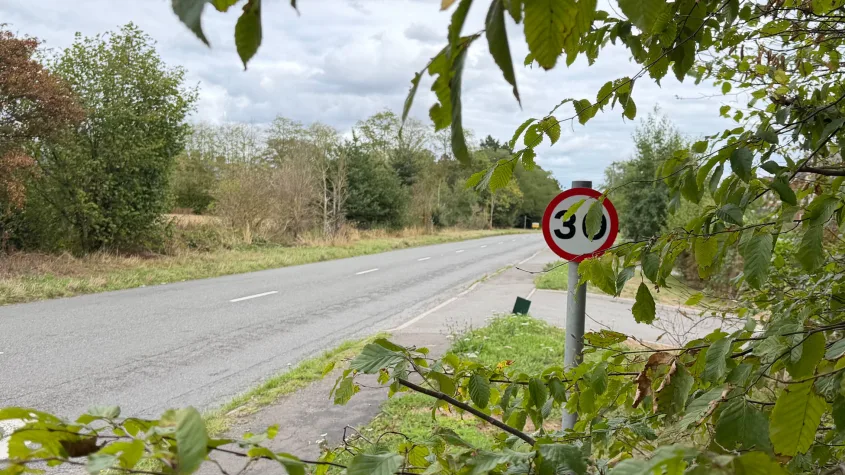
A speed-limit sign buried inside a hedge is a wonderfully British piece of road furniture: official, expensive and rendered useless by drizzle-fed shrubbery. It would be funny if the consequences stopped at missing a turn. They do not.
New RAC research says 19 per cent of the drivers it surveyed had accidentally exceeded a speed limit after foliage hid a sign. Before every caught speeder appoints a bramble as legal counsel, this is a self-reported poll of 1,412 UK motorists, not proof that every ticket beside a privet hedge is unjust. Still, the wider finding is hard to shrug off: 94 per cent said they had seen signs obscured by branches, trees or hedges.
A road sign should not require detective work
The basic bargain of road rules is simple. Authorities make the instructions visible; drivers pay attention and obey them. When a red circle disappears behind a summer growth spurt, half of that bargain has wandered into the undergrowth.
The Department for Transport’s own guidance is admirably blunt about visibility. It tells traffic authorities to preserve clear sight lines and recommends regular inspections, particularly in summer when grass and foliage grow quickly. That is not decorative advice. A sign must be seen early enough for a driver to understand it and respond without a last-second stab at the brakes.
The RAC poll found 13 per cent of respondents had braked sharply after encountering obscured signage, while five per cent said they had accidentally passed a give-way sign. Those are the figures that matter more than the easy speeding headline. A hidden change of limit is irritating; a concealed instruction at a junction can turn botany into a collision risk.
Drivers still have to bring their brains
There is a temptation to treat technology as the sensible adult in the car. Camera-based sign recognition can display the limit on the dashboard, while navigation data offers another clue. Useful? Certainly. Infallible? Absolutely not. If leaves can block your view, they can block a camera’s view too, and digital map data does not know about every temporary or recently changed restriction.
The answer is not to surrender judgement to a glowing icon behind the steering wheel. Look for the whole road environment: repeaters, road markings, the character of the street and any change in lighting or junction layout. None of that replaces a lawful sign, but it gives an attentive driver more chance of spotting that something does not add up.
Equally, “I could not see it” should not become the motoring equivalent of “the dog ate my homework”. Hedges explain a visibility problem; they do not grant a seasonal licence to charge through unfamiliar roads. If the limit is unclear, easing off is less satisfying than blaming the council, but considerably cheaper than discovering a hidden hazard at speed.
Reporting it beats muttering at it
Most of us are excellent at noticing road defects and Olympic-grade at complaining about them inside the car. The useful part comes afterwards. GOV.UK directs drivers to report overhanging branches, hedges and other road obstructions to the local council. On motorways and major A-roads managed in England, the destination is National Highways; Scotland, Wales and Northern Ireland have their own services.
That small act matters because vegetation is a moving problem. A sign that was clear during a spring inspection can resemble a forgotten archaeological discovery by August. One report supplies a location and gives the responsible authority something more actionable than a nationwide chorus of dashboard grumbling.
Cut the excuses — and the hedge
The RAC’s percentages should be read as a warning signal rather than a national headcount. The poll was weighted to represent UK motorists, but it still records what people remember and report about their own driving. Memory becomes especially creative when a speeding ticket enters the story.
Yet scepticism about excuses must not become an excuse for poor maintenance. Drivers cannot obey information that the roadside has swallowed, and authorities already have guidance telling them to keep signs visible. The sensible verdict leaves room for responsibility on both sides: motorists should slow down when the road stops making sense, and road managers should stop making basic instructions a horticultural treasure hunt.
A hedge is lovely around a garden. Draped across a give-way sign, it is an infrastructure failure wearing leaves. Britain does not need smarter excuses for hidden signs. It needs sharper eyes, quicker reports and, occasionally, a very large pair of secateurs.
Sources
- Auto Express: obscured road-sign survey discovery report
- RAC: survey on foliage obscuring road signs
- Department for Transport: Traffic Signs Manual
- GOV.UK: report an obstruction on the road

We are experienced automotive journalists and editors, with a passion for all things automotive. Whether it’s automotive news and reviews, the latest in EV technology, or just an unusual take on the latest models, we’re all over it!