Electric cars have spent years swaggering into the room with ever larger batteries, ever sillier power figures and kerbweights best discussed in hushed tones. Volkswagen’s Mission Efficiency arrives with a more interesting boast: what if the cleverest EV is simply the one that wastes the least?
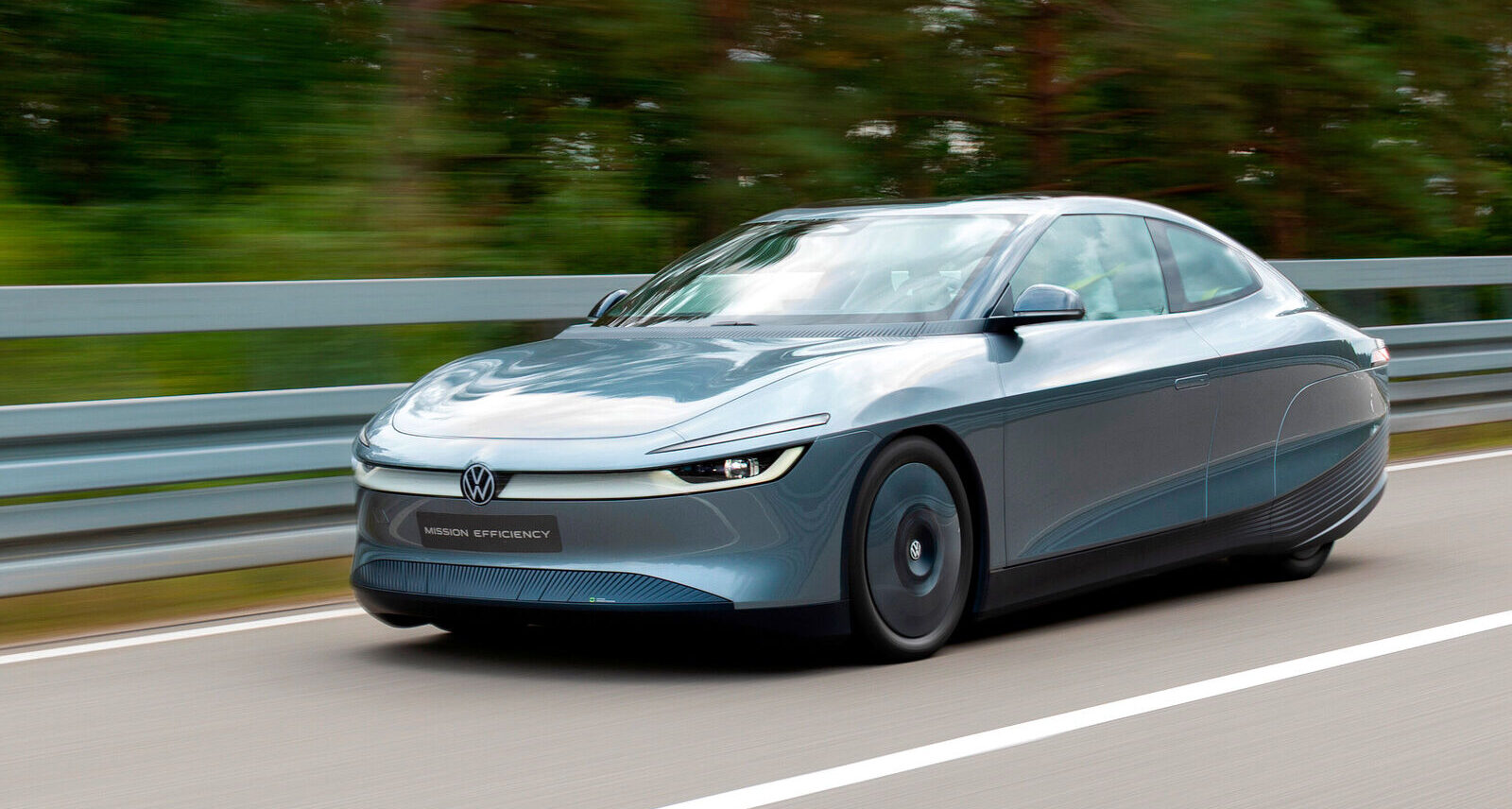
That sounds painfully sensible, perhaps even a little beige. Look at the thing, though. This long, low 2+2 coupé resembles a silver raindrop that has been taught how to overtake. It is the spiritual successor to the wonderfully odd XL1, yet its real trick is not nostalgia. It is making efficiency look desirable rather than medicinal.
A small battery with a very long reach
The headline achievement is a 1,278-kilometre run from Wolfsburg to Vienna, completed with one charging stop and 164 kilometres of indicated range remaining. Volkswagen records consumption at 6.89kWh per 100km without charging losses, or 7.51kWh including them. For context, that is the sort of thrift that makes the usual electric SUV look as though it has left the handbrake on.
Better still, the Mission Efficiency did this with a 54.9kWh usable battery rather than a slab the size of a garden patio. Its 99kW motor and front-wheel-drive MEB+ foundations are related to the new ID. Polo. That connection matters more than the record plaque. Exotic one-off engineering can produce dazzling numbers; familiar production hardware suggests some of the lessons might actually reach ordinary cars.
Volkswagen also claims a drag coefficient of 0.158 for this road-approved prototype. The number is impressive, but the shape tells the story more vividly: a tiny frontal area, a teardrop tail, covered rear wheels, a smooth underside and active cooling flaps. Even the inner faces of the wheels get patented deflectors to stop air tumbling into the rims. This is not styling garnish. Every surface appears to have been interrogated by a wind tunnel until it confessed.
Efficiency without the hair shirt
Ultra-efficient concepts often behave as though passengers are an unfortunate contaminant. Mission Efficiency makes a better case for itself. There are four seats, although the rear pair are intended for people up to about 1.60 metres tall, and Volkswagen quotes a 481-litre boot. In other words, children, shopping and charging cables need not be sacrificed at the altar of aerodynamic purity.
There is mischief in the details, too. Solar cells across the roof and rear glass can feed the low-voltage electrical system and, in favourable conditions, contribute up to 30 kilometres of range a day. Inside, a phone or tablet replaces a built-in infotainment screen, while a portable Bluetooth speaker stands in for a conventional audio system. That is either refreshing honesty or a designer discovering the contents of a student flat. Possibly both.
The lightweight structure mixes aluminium with carbon-fibre and aramid composites, so nobody should pretend this is merely an ID. Polo wearing a slippery frock. Yet the concept’s philosophy is sound. Chasing efficiency cuts charging time, energy use and material demand together. A bigger battery fixes range anxiety by carrying more stuff; better aerodynamics fixes it by asking the car to do less work in the first place.
The idea deserves to escape the laboratory
Volkswagen calls Mission Efficiency a near-production concept, but it is not for sale. That familiar phrase is the only dull part of the whole project. The market is already drowning in tall, heavy EVs shaped by fashion and rescued by battery capacity. Here is a machine that treats the air as an engineering problem and still remembers that cars should stir something in the person holding the key.
No, Britain does not urgently need a fragile science experiment with token back seats and a heroic price. It could use a genuinely attainable electric coupé that borrows this car’s discipline, elegance and refusal to waste energy. If Volkswagen can turn even half of this thinking into something people can buy, Mission Efficiency will have achieved a record that matters far more than any laboratory number: making restraint feel exciting.
Sources
- Stunning Volkswagen Mission Efficiency unveiled: XL1 successor with 500-mile EV range
- Mission Efficiency – Volkswagen presents the world’s most efficient near-production electric car
- The new Mission Efficiency – World premiere
Image credit: Volkswagen AG

We are experienced automotive journalists and editors, with a passion for all things automotive. Whether it’s automotive news and reviews, the latest in EV technology, or just an unusual take on the latest models, we’re all over it!