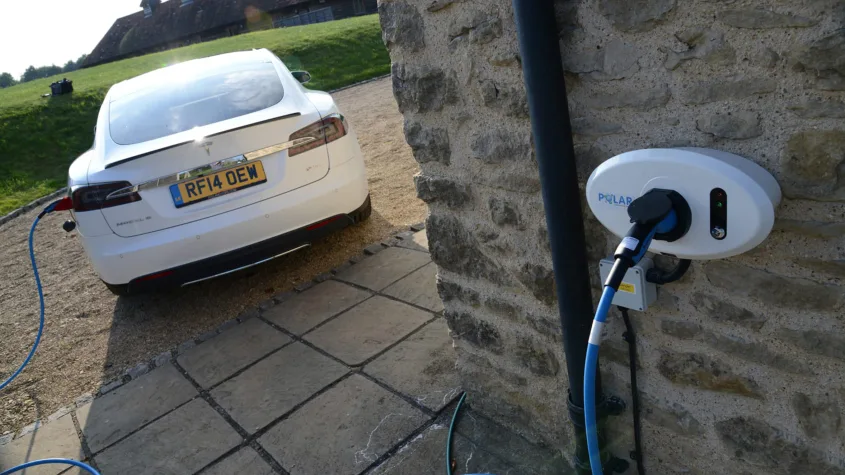
Britain has pulled off a small but impressive magic trick: remove five per cent VAT from domestic electricity and still make the average capped unit price go up. If your electric car charges on the driveway, do not throw the smart meter through a window just yet. The tax cut is real. It is simply arriving at the same moment as higher underlying energy costs, so most of the saving disappears before reaching the plug.
From 1 October, qualifying domestic electricity in England, Scotland and Wales is zero-rated for VAT until 31 March 2027. Ofgem’s average Direct Debit electricity rate under the new price cap is 26.32p per kilowatt-hour, compared with 26.11p from July to September. That is a rise of 0.21p per unit: irritating, but hardly the financial equivalent of plugging your car into a toaster powered by banknotes.
A tax cut wearing an energy-price disguise
The awkward detail is that the two figures are dressed differently. The old 26.11p rate included five per cent VAT; the new 26.32p rate does not. Ofgem explicitly warns that the periods cannot be compared directly because of that change. In plain English, the taxman has stepped backwards while the underlying cost of electricity has stepped further forwards.
For a simple illustration, drawing 60kWh from the grid at the old average rate cost about £15.67. At the new average it costs about £15.79, an increase of roughly 13p. Had five per cent VAT still been applied to the new rate, that same 60kWh would have cost about £16.58. The temporary zero rate therefore prevents roughly 79p being added to that particular charging session.
Those are deliberately tidy sums. A car does not necessarily take its headline battery capacity from the wall, charging losses exist, and few owners habitually arrive home with precisely zero per cent remaining. Regional prices, payment method and tariff also matter. Still, the arithmetic reveals the point: the VAT change has cushioned a rise rather than delivered a dramatic bargain.
The price cap is not a household bill limit
Ofgem says the overall energy price cap for a typical dual-fuel household has risen by four per cent for October to December, from an annualised £1,663 to £1,723. That headline is easy to misread. The cap limits unit rates and standing charges on default tariffs; it does not put a hard ceiling on the final bill. Use more energy and you still pay more.
The average electricity standing charge for a Direct Debit customer has actually fallen, from 57.19p to 54.83p a day. Gas has moved the other way, and higher wholesale gas prices are a major reason the typical combined bill has increased. An EV owner looking only at the household total can therefore miss the slightly different story happening at the charging cable.
Drivers on fixed tariffs are outside the price-cap rate change, but the Government says the VAT removal applies to them too. Prepayment users also receive the zero rate when topping up. Northern Ireland is the exception: domestic electricity there remains subject to five per cent VAT because the temporary order applies to Great Britain.
Cheap charging still requires a clock
The capped average is useful for comparison, yet it is not the cleverest way to charge an EV. Time-of-use tariffs can offer much lower overnight rates, provided your household pattern, meter and car suit them. A scheduled charge while the kettle, oven and shower are asleep can matter far more than a few tenths of a penny on the standard unit rate.
That does not make the VAT cut pointless. The Government estimates it will save an average household £45 a year, and electricity-heavy homes may benefit more. For EV drivers, heat-pump users and households without gas, removing a tax applied to every unit is a sensible piece of winter relief. The problem is presentation: a tax reduction feels like a promise of cheaper electricity, while the bill may stubbornly refuse to shrink.
The honest verdict is wonderfully unglamorous. Home charging has not suddenly become expensive, nor has it received a spectacular giveaway. The VAT cut has acted like an umbrella in a downpour: you are still getting wet around the edges, but you would notice immediately if somebody took it away.
Sources
- VAT cut would mean cheaper EV charging, if it wasn’t for the new energy price cap
- Changes to energy price cap between 1 October and 31 December 2026
- Energy price cap unit rates and standing charges
- Energy price cap will rise by 4% from October 2026
- Breathing space on your energy bill
- The Value Added Tax (Supplies of Domestic Electricity) Order 2026

We are experienced automotive journalists and editors, with a passion for all things automotive. Whether it’s automotive news and reviews, the latest in EV technology, or just an unusual take on the latest models, we’re all over it!