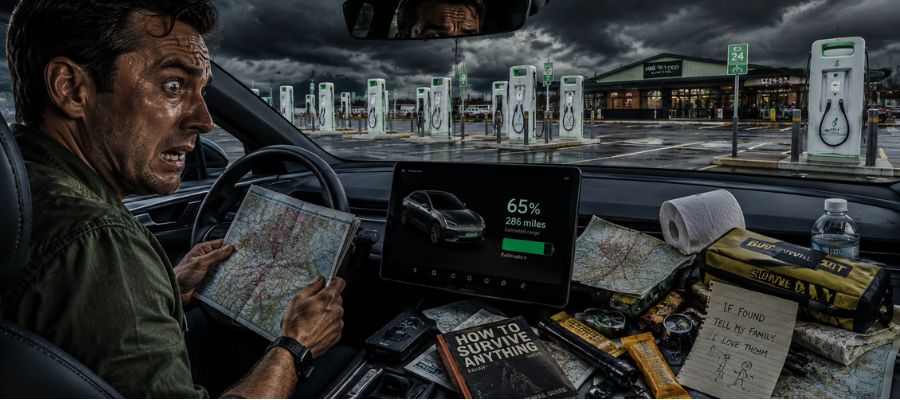
Most people who worry about running out of charge in an electric car have never actually run out of charge in an electric car. In fact, many haven’t even driven one. Yet mention electric vehicles in the pub, at a family barbecue, or in the comments section beneath literally any motoring article, and somebody will inevitably appear like a character from a low-budget disaster film.
“What if you get stuck on the motorway?”
“What if all the chargers are broken?”
“What if it’s cold?”
“What if there’s a zombie apocalypse and the National Grid collapses?”
Nobody asks these questions about petrol cars, despite the fact that thousands of motorists run out of fuel every single year. Nobody’s uncle refuses to buy a diesel because he once saw a broken petrol pump at a service station in 1997.
So, is range anxiety actually a real problem, or is it largely happening between our ears?
The Great EV Horror Story
For decades, we’ve been conditioned to believe that a car should be capable of travelling hundreds of miles without interruption. Somewhere along the line, stopping became a sign of weakness.
This is odd, because human beings are terrible at driving long distances without stopping. Most of us need coffee every two hours. Children need the toilet every 37 minutes. Dogs need walking. Somebody always wants a Greggs sausage roll. Yet somehow, when an EV suggests stopping for twenty minutes to recharge, society reacts as though it has been asked to re-enact the Oregon Trail.
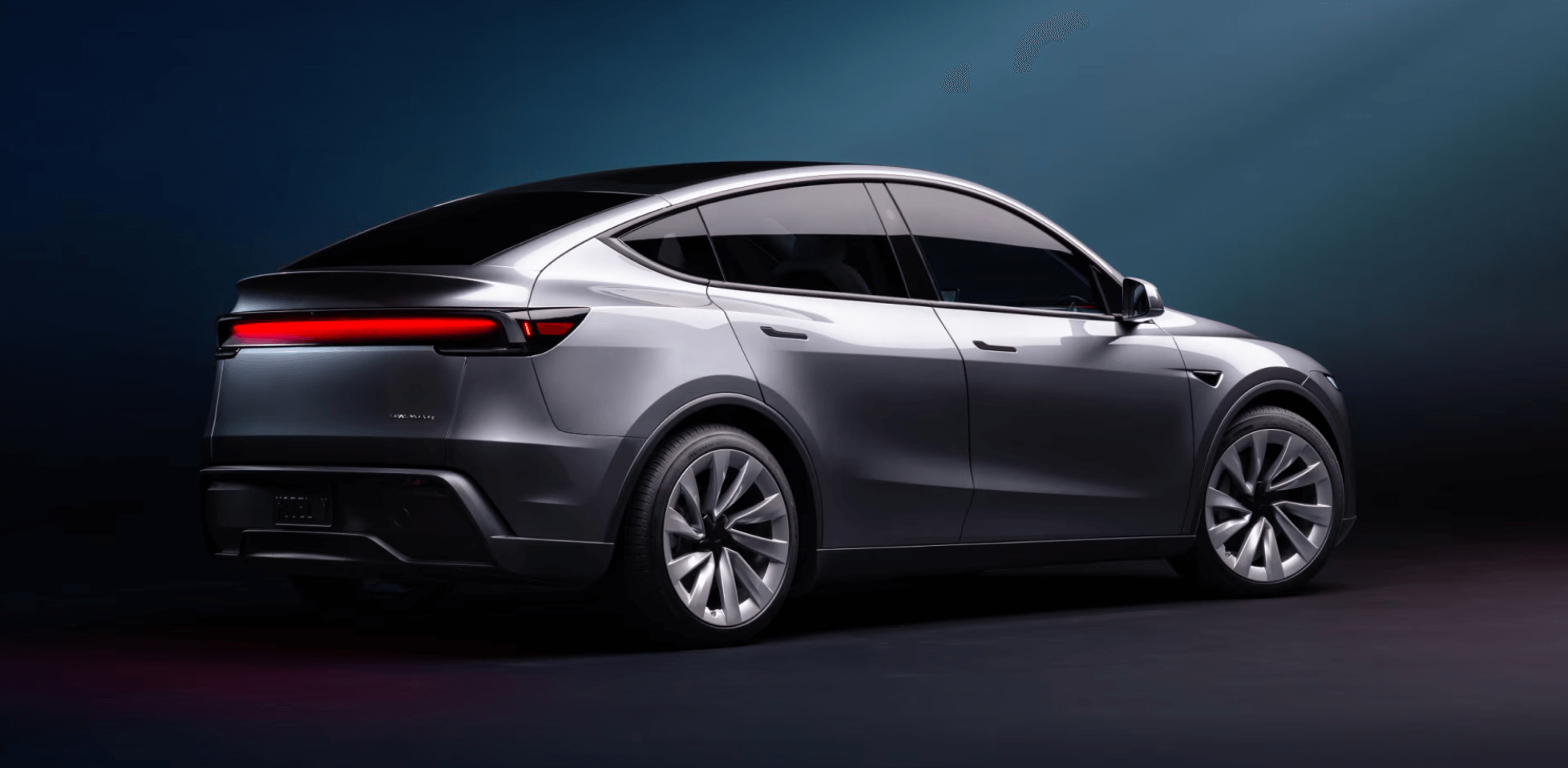
The truth is that many modern electric cars now comfortably exceed 250 miles on a charge. Models such as the Tesla Model Y, Kia EV3, Hyundai Ioniq 5 and Polestar 2 can travel distances that would have seemed science fiction only a decade ago.
Yet people continue discussing EVs as if they’re early-generation smartphones that died before lunchtime.
It’s a bit like still refusing to watch streaming television because you once suffered through dial-up internet in 2002 while trying to download a song from Napster. Technology moves on.
We Already Live With Range Anxiety
Here’s an unpopular opinion. Drivers of petrol and diesel cars experience range anxiety all the time. They just don’t call it that.
How many times have you looked at the fuel gauge and muttered, “I’ll get petrol tomorrow”? How many times have you driven past a motorway service station because fuel was 12p per litre more expensive, convincing yourself you could make it home? How many times have you driven with the fuel warning light glowing like the Eye of Sauron, pretending everything is absolutely fine?
Exactly. The difference is familiarity. We’ve spent decades learning where petrol stations are. We instinctively know where the local supermarket forecourt is located. Filling up has become background noise.
Electric charging requires a change in routine, and human beings famously dislike change. We still argue about whether pineapple belongs on pizza and whether the final series of Game of Thrones ruined television forever. Adjusting to new fuelling habits was never going to happen overnight.
Hollywood Hasn’t Helped
Cinema has done EVs no favours. Action heroes rarely stop to recharge. James Bond never says, “Q, I need a rapid charger and a Costa Coffee.” Vin Diesel doesn’t pause midway through Fast & Furious 17 to compare charging tariffs on multiple apps while Dominic Toretto mutters, “It’s all about family… and contactless payment.”
Our cultural understanding of motoring remains rooted in petrol-fuelled freedom. The iconic road trip scenes from films such as Easy Rider, Thelma & Louise and National Lampoon’s Vacation revolve around endless highways and roaring engines.
Electric vehicles ask us to think slightly differently. Plan a little. Pause occasionally. Stretch your legs. Frankly, that might not be such a bad thing.
But Sometimes Range Anxiety Is Completely Justified
Let’s not pretend range anxiety is entirely imaginary. Public charging infrastructure in the UK still isn’t perfect. Some chargers are broken. Some require separate apps. Some occupy hidden corners of supermarket car parks seemingly designed by people who actively dislike motorists. Occasionally, you’ll arrive at a charging hub only to discover every bay occupied by somebody who apparently believes 100% charge is a constitutional right.
Long-distance EV travel can still involve more planning than simply filling a petrol tank. Drivers without off-street parking face additional challenges. Public charging costs can vary wildly. Rural areas still need greater infrastructure investment. These concerns are legitimate.
However, there’s a difference between acknowledging imperfections and assuming every EV journey resembles a post-apocalyptic survival movie directed by Christopher Nolan.
Most EV owners quickly adapt. Surveys consistently show high satisfaction levels among owners, with many saying they’d never return to petrol or diesel. That suggests reality may be considerably less dramatic than the headlines.
The Smartphone Effect
Think back to your first smartphone. Many people worried constantly about battery life. They carried chargers everywhere. Portable battery packs became fashion accessories. Eventually, habits changed. People learned charging patterns. They plugged in overnight. Battery concerns faded into the background.
Electric cars often follow the same trajectory. New owners frequently check range obsessively during the first few weeks. Every percentage drop feels catastrophic. Three months later they’re treating charging much like charging a phone. Plug in at home. Wake up full. Repeat.
The anxiety doesn’t disappear because the car changes. It disappears because the driver does.
So, Is It In Your Head?
Mostly, yes.
For the average UK motorist, who travels fewer than 25 miles per day, modern EV range comfortably exceeds typical usage. The bigger obstacle isn’t battery technology. It’s psychology.
We’re creatures of habit. We fear unfamiliar systems. We remember horror stories far more vividly than boring success stories. Nobody writes newspaper headlines proclaiming: “Thousands Complete Entirely Uneventful EV Journeys Again.”
Fear sells. Reality rarely does. That doesn’t mean EV ownership suits everybody. If you regularly tow heavy loads across remote areas, drive huge annual mileages, or lack reliable charging access, petrol, diesel or hybrid power may still make more sense. But for millions of drivers, range anxiety may be less about the car and more about learning a new routine.
Perhaps the biggest irony is this. Many people are terrified of running out of electricity in a car while simultaneously allowing their smartphone battery to reach 2% every single day. Now that’s irrational.

Rob is an experienced automotive journalist and editor, with a passion for all things automotive. Whether it’s automotive news and reviews, the latest in EV technology, or just an unusual take on the latest models, Rob is all over it!