Car makers have become very good at raiding the attic. Usually they find an old badge, polish it with a marketing cloth and stick it onto a crossover. Renault has found something far more valuable: the idea that a small, upright and slightly mischievous performance car can make people care before anyone mentions boot volume.
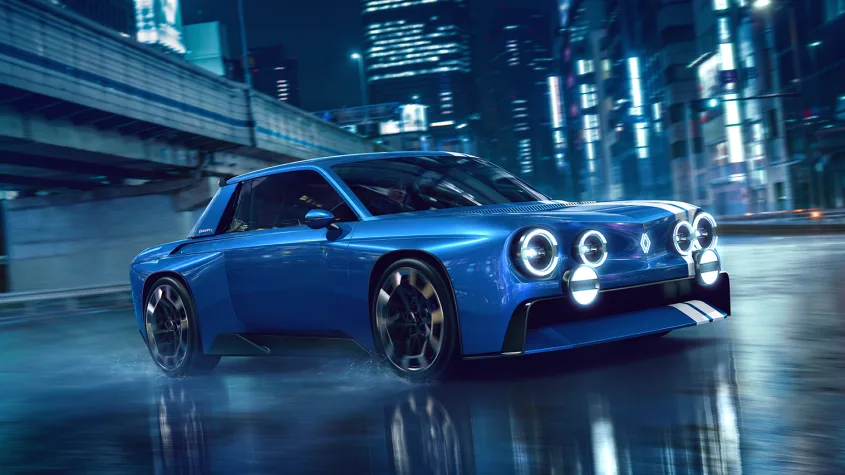
The Renault 8 Gordini Concept is a compact, two-door electric coupe with its motor at the back, 270hp and the famous pair of white stripes running across a blue body. It is proudly theatrical, pleasingly odd and officially unavailable to buy. That final detail is the only part Renault should reconsider.
A tribute with its own pulse
Retro design becomes tiresome when every line exists merely to prompt recognition. The Gordini avoids that trap because it treats the original as a set of ingredients rather than a photocopy. The V-shaped bonnet, squared wheelarches and round lamps establish the family connection, but six headlights and a low, wide stance drag the idea firmly into the present.
The proportions do most of the work. This is a proper three-box shape with a short cabin, emphatic arches and wheels staggered at 19 inches in front and 20 at the rear. There is no fake ruggedness, no apologetic black cladding and no attempt to describe a coupe as a lifestyle utility object. It looks like a car designed by people who still draw cars in the margins of notebooks.
Even the twin stripes earn their place. Renault says they continue into the cabin and change tone across the top of the dashboard. That transforms a familiar piece of decoration into part of the architecture. Heritage should do exactly this: give designers a useful thread, then get out of their way.
The cabin remembers where your eyes belong
Inside, black bucket seats wear blue corduroy inspired by 1960s design, while the dashboard and centre console use brushed aluminium. Round digital instruments echo the exterior lamps. The door stitching nods to painted circuit kerbs. It sounds considered rather than overloaded, which is refreshing in an age when a large touchscreen is often expected to perform the work of both design team and switchgear department.
Blue corduroy in an electric sports coupe could have looked like somebody upholstered a racing car with an elderly relative’s curtains. Here it suits the point. Gordini was always about extracting excitement from modest machinery, so a tactile, unfussy cabin feels more authentic than acres of glossy carbon fibre.
Renault also lists leather, Alcantara and blue suede accents, so the finished show car is hardly an exercise in austerity. The restraint lies in the arrangement. Materials create the atmosphere; they do not appear to be competing for attention like salespeople at a furniture showroom.
Two hundred and seventy horsepower is enough
The most attractive technical figure is the one Renault has not inflated. A rear-mounted electric motor produces 270hp, all sent through a shape that looks compact and purposeful. In a world of electric cars boasting outputs better suited to tugboats, that sounds like a deliberate choice rather than an apology.
Performance cars need usable power, responsive controls and a chassis that lets the driver participate. Another four-figure output claim would only turn the Gordini into a tyre invoice with stripes. Rear drive and a sensible amount of shove leave room for playfulness, which is the quality this concept promises before it turns a wheel in public.
Renault has not supplied battery capacity, range, weight or acceleration figures on its UK concept page. Fine. Those numbers matter enormously to a production car, but they are not the reason this design lands so well. The concept’s job is to make a case for character. It has already done that.
Build the idea, keep the discipline
Renault warns that the concept is not available for purchase and that its design and specifications are indicative. Show cars live in that comfortable territory where pillars can stay thin, wheels can stay enormous and accountants wait outside. A showroom version would inevitably need compromises.
Yet the core idea is too good to leave under motor-show lights. A small rear-drive electric coupe with distinctive proportions, moderate power and a cabin free from visual clutter would offer something the market barely provides. Renault could simplify the materials, shrink the wheels and keep the attitude.
The 8 Gordini Concept succeeds because it remembers that nostalgia should lead somewhere. Renault has honoured the old car by recovering its spirit of accessible mischief, then giving that spirit a modern shape. Now comes the difficult part: stop admiring it as a design exercise and find a way to put number plates on it.
Sources

We are experienced automotive journalists and editors, with a passion for all things automotive. Whether it’s automotive news and reviews, the latest in EV technology, or just an unusual take on the latest models, we’re all over it!