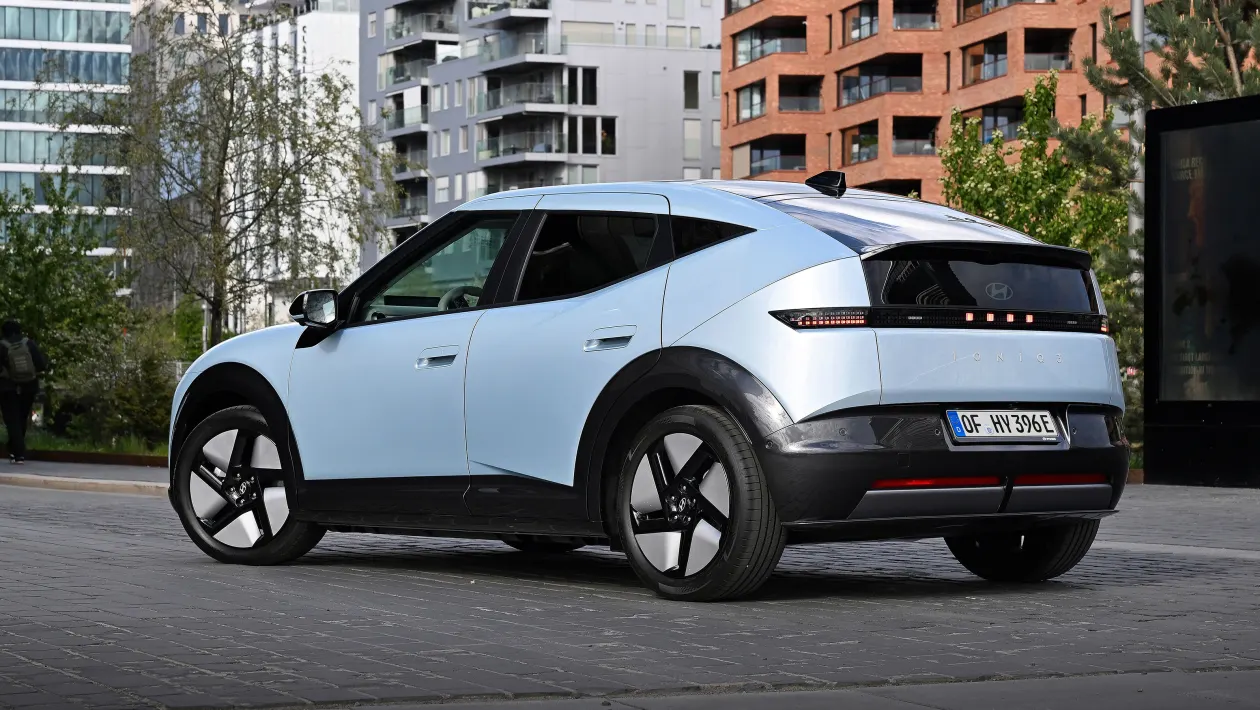
The electric car has finally crashed through a psychological barrier without arriving on tiny wheels, with four seats and the luggage capacity of a coat pocket. Hyundai’s new IONIQ 3 can now cost £18,495 after the government grant. That is proper hatchback money for a proper five-seat hatchback — and suddenly every excuse about EVs being toys for the wealthy looks a little dusty.
The arithmetic is unusually cheerful. Hyundai’s official October price list puts the entry-level Advance 42kWh at £22,245 on the road. The IONIQ 3 has joined Band 1 of the government’s Electric Car Grant, worth up to £3,750, and the seller applies the saving at purchase. Subtract one from the other and you land at £18,495.
That undercuts plenty of ordinary petrol superminis while giving buyers something larger and far more interesting to look at. Hyundai calls it an Aero Hatch; everyone else will call it the point at which affordable EVs stopped apologising.
Cheap does not mean flimsy on paper
The base car uses a 42.2kWh battery and claims 213 miles on the WLTP cycle. Its front motor produces 147PS, which is actually more than the 135PS long-range version manages, and 0-62mph takes 8.7 seconds. Nobody will mistake it for an IONIQ 5 N, but it should leave a roundabout without submitting a written request.
More useful is the packaging. At 4,155mm long, the IONIQ 3 occupies the sort of road space Britain understands, yet the wheelbase stretches to 2,680mm and the boot holds 441 litres with the rear seats up. There is another 119-litre compartment under the boot floor. That is not token urban-EV storage; it is enough room for family clutter to develop its own postcode.
Advance trim also avoids the traditional punishment beating reserved for bargain versions. It gets dual-zone climate control, wireless Apple CarPlay and Android Auto, adaptive cruise control with stop-and-go, blind-spot collision avoidance and front and rear parking sensors. The 16-inch wheels may look modest, but they help deliver that 213-mile claim and tyres should cost less than the fashion items fitted to grander trims.
One cold-weather catch
There is, however, a missing line that matters. Hyundai’s specification guide lists battery heating with pre-conditioning from Premium trim upwards, leaving it absent on the £18,495 Advance. That could make rapid-charging stops less consistent in cold weather, precisely when an affordable EV owner without a driveway may need public chargers most.
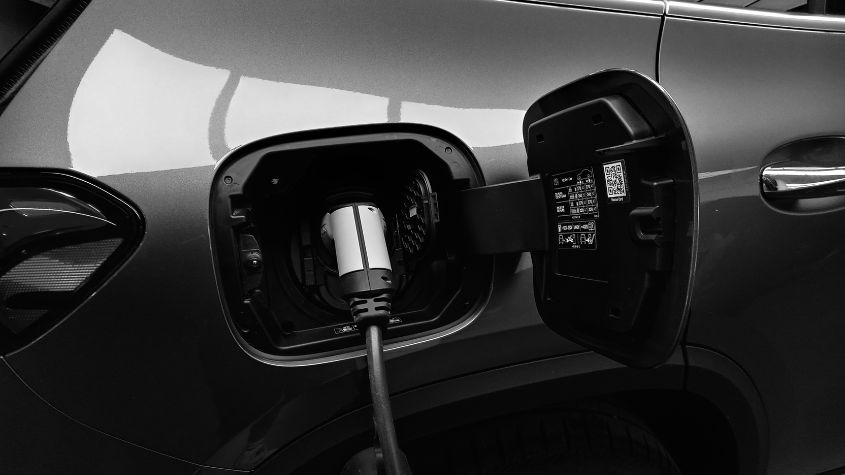
The standard-range car can still go from 10 to 80 per cent in a claimed 29 minutes under ideal conditions, but battery temperature is one of the factors Hyundai says can stretch that time. Saving money on the purchase should not mean discovering the compromise beside a freezing charger in January. Hyundai deserves applause for the price; it also deserves a firm nudge to make pre-conditioning standard.
The bigger battery remains tempting
Drivers who regularly cross counties will naturally eye the 61kWh Advance. It carries a 308-mile WLTP claim and costs £25,745 before the grant. The government lists the IONIQ 3 as a model in Band 1, although buyers should still confirm the exact discounted figure for their chosen variant with the retailer at order time.
The long-range model is sensible, but the small battery is the one that changes the conversation. A 213-mile official range will cover far more daily routines than marketing departments like to admit. Carrying and paying for extra battery every day to soothe two annual motorway trips is not automatically clever. A short charging stop may be the cheaper option.
This is the price rivals must answer
Hyundai has not achieved £18,495 by shrinking the car into a quadricycle or stripping away every useful feature. It has combined a government contribution with an already aggressive list price, then wrapped the result in a body that has personality and a cabin designed around actual people.
There are details to watch: final homologation is still pending for some technical figures, public-charging performance will depend on conditions, and the base car’s missing battery heater is a real blemish. None of that blunts the headline achievement.
The IONIQ 3 has turned the affordable EV from a worthy compromise into something you might choose with a straight face and a little excitement. At £18,495, the question is no longer why an electric hatchback costs so much. It is why the petrol one beside it still thinks it can.
Sources
- Auto Express: Hyundai IONIQ 3 Electric Car Grant report
- GOV.UK: Zero-emission cars eligible for a grant
- Hyundai UK: IONIQ 3 Technical, Specifications and Pricing, October 2026
- Hyundai UK: All-new IONIQ 3
- Hyundai Motor UK: IONIQ 3 UK pricing and specification

We are experienced automotive journalists and editors, with a passion for all things automotive. Whether it’s automotive news and reviews, the latest in EV technology, or just an unusual take on the latest models, we’re all over it!