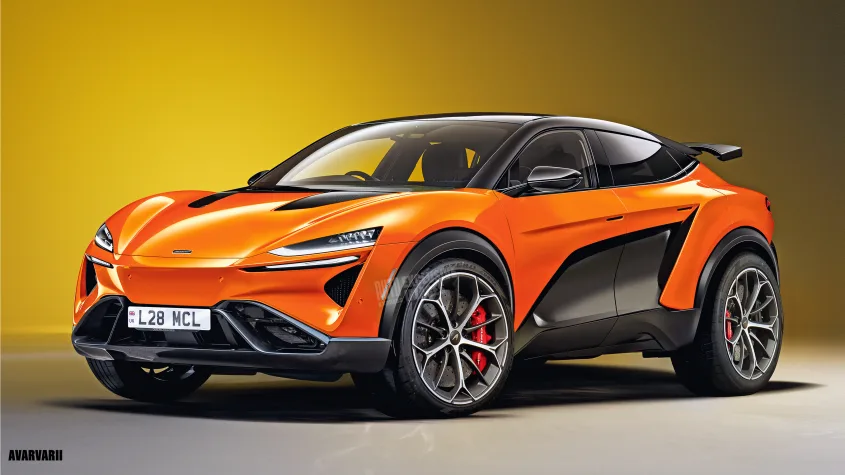
A McLaren SUV is coming. You may now perform the traditional enthusiast ritual: sigh, mutter something about Colin Chapman and pretend Porsche did not settle this argument more than two decades ago. Then look beyond the tall-car headline, because McLaren’s £500 million British investment contains a much more interesting promise. The company wants to bring engine and transmission design and production in-house for the first time.
That is the news with oil under its fingernails. The SUV will sell posters to people with children, dogs and inconvenient hobbies. Building powertrains gives McLaren greater control over the thing that makes a McLaren feel like more than an exotic silhouette. One expands the customer list; the other could deepen the engineering character.
The SUV argument ended years ago
McLaren officially says it will enter new categories, including a performance SUV, as it builds what it calls a complete portfolio around the supercar. There is no public name, design, launch date, price or specification yet, so anyone confidently describing the finished machine is admiring a car that currently exists mostly as a business case.
Still, the decision is hardly mysterious. An SUV can carry more people, command a formidable price and meet buyers who love the badge but cannot fit their lives into a two-seat supercar. Purists will object that practicality dilutes the magic. Perhaps. But a company cannot fund carbon-fibre experiments with purity alone, and there is nothing romantic about a brilliant British manufacturer permanently worrying about the next payroll.
The real test is whether McLaren resists the lazy route. A heavy luxury box with dramatic doors and papaya stitching would earn money, but it would also make the badge feel rented. A convincing McLaren SUV must treat mass as the enemy, steering as a conversation and packaging as an engineering problem rather than permission to become enormous. It need not impersonate a 750S on stilts. It does need a reason to exist beyond margin.
Half a billion pounds buys serious intent
The investment will expand the Woking production centre and McLaren’s carbon-fibre operation in South Yorkshire. A new UK vehicle-assembly facility is planned, while recently opened sites in Bicester and the Midlands cover design, innovation, testing and development. McLaren says at least 1,000 direct and indirect jobs will be created by 2032, its British manufacturing workforce will double and as many as 3,000 further roles could follow through the supply chain.
Those figures matter because the announcement is about industrial capability as much as another model. McLaren intends to design and build two new engines and transmissions itself, supporting a continuing hybrid strategy. Owning more of that work should give its engineers tighter control over weight, response, packaging and software — the unglamorous details that decide whether a fast car becomes memorable or merely expensive.
There is risk here, naturally. New facilities consume money with terrifying efficiency, new model categories can expose a brand to unfamiliar rivals, and expanding output is useful only if customers keep arriving. McLaren’s shareholder, Abu Dhabi government investor L’IMAD, is funding the programme as part of a broader commitment to the business. This is not loose change down the back of Woking’s sofa.
Make the sensible car gloriously unsensible
The encouraging part is that McLaren is keeping design, engineering and manufacturing in Britain while adding apprenticeships and safeguarding existing roles. In an industry fond of announcing visionary concepts before quietly moving the difficult work elsewhere, bricks, machinery and skilled jobs carry welcome substance.
So yes, make the SUV. Let it pay for the strange, low, inconvenient cars that cause adults to stop mid-sentence when one passes. Just do not ask enthusiasts to applaud because it is profitable. Win them over by making it light for its kind, technically distinctive and unmistakably McLaren from the first steering input.
The SUV will grab the headlines because it rearranges the showroom. The engines may shape the company. If £500 million gives McLaren the confidence to own more of its engineering and the stability to take creative risks, the tallest car in its history could end up protecting everything we like about the lowest ones.
Sources
- Auto Express: McLaren SUV and investment discovery report
- McLaren Automotive to invest £500m to anchor its future in the UK

We are experienced automotive journalists and editors, with a passion for all things automotive. Whether it’s automotive news and reviews, the latest in EV technology, or just an unusual take on the latest models, we’re all over it!